
 English
 Français
 Español
News
MENU

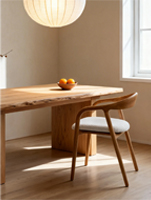
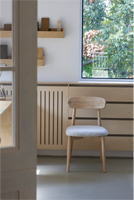
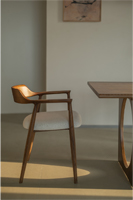
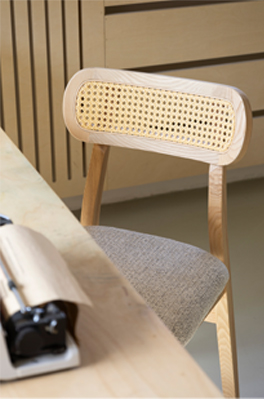
If you are shopping for new seating around your table, you have probably noticed that an ash wood dining chair keeps showing up in showrooms, design magazines and online shops. There is a good reason. Ash is strong, light in color, and gentle on the budget compared with some other hardwoods. This guide walks you through what makes ash dining chairs worth considering, how to judge quality, and how to keep them looking good for a long time. Why an Ash Wood Dining Chair Is a Popular Choice Ash is a hardwood known for its toughness and flexibility. It has been used for generations to make tool handles, baseball bats and oars, which tells you something about how well it handles impact and repeated stress. In a dining room, that same strength means a solid ash dining chair can cope with daily use, kids pulling chairs in and out, and the occasional lean-back from a relaxed guest. Ash also has a very recognizable look. The heartwood and sapwood are both pale, ranging from creamy white to light tan, and the grain is straight and open with a clear, bold pattern. This makes ash wood dining chairs a natural fit for Scandinavian, Japanese-inspired, modern farmhouse and minimalist interiors where a bright, natural feel matters. Main benefits at a glance Strong and shock resistant, so frames hold up well over time. Bends well when steamed, which allows curved backs and comfortable, flowing shapes. Light color brightens small rooms and pairs easily with white, gray, black and warm earth tones. Takes stain and clear finishes evenly, so you can go natural, whitewashed or dark. Usually priced below walnut and often close to or below oak. How Ash Compares With Other Dining Chair Woods Hardness is one way to compare woods, and it is measured on the Janka scale. The higher the number, the harder the wood resists dents and wear. The figures below are approximate and vary by species and board, but they give a useful picture of where an ash dining room chair sits among its competitors. Wood Approx. Janka Hardness Color Best For White ash 1,320 lbf Cream to light tan Strong, bright, modern looks White oak 1,360 lbf Light to medium brown Traditional and rustic styles Beech 1,300 lbf Pale pinkish tan Smooth, even grain looks Walnut 1,010 lbf Rich dark brown Premium, formal styling Pine 380 to 870 lbf Pale yellow Budget and casual furniture In practice, an ash wood chair for a dining table is about as hard as oak and beech, much harder than pine, and noticeably harder than walnut. Its real advantage is the combination of strength and lighter weight, which makes the chairs easier to move when you are cleaning or rearranging the room. What to Check Before You Buy Ash Dining Chairs Not every chair labeled as ash is built the same way. Some are solid wood throughout, while others use ash veneer over engineered boards or mix ash with cheaper woods in hidden parts. Knowing what to look for helps you avoid disappointment. Solid ash versus ash veneer A solid ash dining chair is made from whole pieces of timber, so scratches can be sanded out and the chair can be refinished later. Veneer chairs are thinner on the surface and cannot be sanded much. Veneer is not automatically bad, especially for molded plywood seats, but the listing should say clearly which parts are solid and which are veneered. If the description just says "ash finish" or "ash look," it may not contain any real ash at all. Joinery and construction The strongest chairs use mortise and tenon joints, often reinforced with glue and dowels. Corner blocks under the seat add extra stability. Be cautious of chairs held together mainly with staples or screws driven straight into end grain, since these loosen over time. When you test a chair in a store, sit down, shift your weight and lean slightly. Any creaking, wobbling or racking from side to side is a warning sign. Quick inspection checklist Look underneath the seat for visible joinery, corner braces and consistent wood color. Check that the legs sit flat on the floor with no rocking. Run your hand over the surface to make sure the finish is smooth and even. Ask about the weight rating, which is typically 250 to 300 lb (113 to 136 kg) or more for good dining chairs. Confirm the warranty covers joint failure, not just finish defects. Choosing the Right Style and Finish Because ash is a pale, neutral wood, the finish makes a big difference to the final look of your ash wood dining chairs set. The same chair design can feel airy and Scandinavian in a natural finish or dramatic and contemporary in black. Popular finish options Natural or clear coat: keeps the pale tone and showcases the grain. Best for bright, minimalist rooms. Whitewash or white oil: gives a soft, washed look that suits coastal and farmhouse interiors. Black or charcoal stain: ash's open grain stays visible through dark stain, creating a bold, textured look. Honey or walnut stain: adds warmth if you want the chair to blend with darker floors or tables. Matching chairs to your table An ash dining room chair works well with a table in the same wood for a calm, coordinated look, but it also contrasts nicely with darker tops such as walnut or black-stained oak. If you pair it with a white marble or stone top, the pale wood keeps the space soft and balanced. For a more relaxed feel, try mixing two chair styles in the same wood and finish so the set looks collected rather than matched. Getting the Size and Comfort Right A beautiful chair is not worth much if people want to leave the table after twenty minutes. Comfort depends mostly on proportions, so measure your table before you shop. Measurement Recommended Range Why It Matters Seat height 17 to 19 in (43 to 48 cm) Keeps feet flat on the floor Gap between seat and tabletop 10 to 12 in (25 to 30 cm) Leaves room for legs Seat width 16 to 20 in (40 to 50 cm) Supports most body sizes Table space per chair About 24 in (60 cm) Avoids elbow bumping Clearance behind the chair 36 in (90 cm) or more Lets people sit and stand easily Wood seats can feel firm during long dinners. If you like to linger, look for a gently contoured seat or add a thin seat cushion. Chairs with a slightly curved, steam-bent backrest also support the lower back better than flat, vertical slats. Armchairs at the ends of the table add comfort for the host, while armless chairs along the sides tuck neatly under the tabletop and save space. How to Care for Your Ash Wood Dining Chair Ash is fairly low maintenance, but a few habits will keep it looking fresh and prevent problems such as cracked joints or faded patches. Wipe spills right away with a soft, slightly damp cloth, then dry the surface. Standing liquid can penetrate open grain and leave marks. Dust regularly with a microfiber cloth and avoid harsh chemical cleaners that can dull the finish. Keep chairs away from radiators, vents and direct afternoon sun. Heat and strong light cause fading and dryness. Aim for indoor humidity of roughly 40 to 55 percent, since big swings make wood expand and contract. Stick felt pads under the legs to protect hard floors and reduce stress when sliding the chairs. Tighten any loose screws or bolts every few months, and fix wobbles early before joints weaken. If an oil-finished chair starts to look dry or patchy after a year or two, a light re-oiling usually restores it. Lacquered chairs need less upkeep, but deep scratches may require a professional touch-up. Because solid ash can be sanded, even an older chair can often be refinished instead of replaced. Sourcing and Sustainability Questions to Ask Many ash trees in North America have been affected by the emerald ash borer, an invasive beetle, and this has influenced supply and pricing in some regions. European ash is also facing disease pressure. None of this means you should avoid ash furniture, but it is reasonable to ask where the timber comes from and whether it is certified by a scheme such as FSC or PEFC. Some makers also use salvaged ash from trees that had to be removed, which turns a problem into attractive, characterful furniture. Budget Expectations and Smart Buying Tips Prices for ash dining chairs vary widely by brand, country and construction. Mass-market chairs with veneer or mixed-wood construction cost the least, mid-range solid ash chairs from established furniture brands sit in the middle, and handcrafted or designer pieces cost the most. Rather than chasing a specific number, compare what you get at each level: solid versus veneer, joinery type, finish quality and warranty length. Buy one chair first if you can, sit in it for a while, then order the full set. Order a spare chair if the style is custom, since matching wood tone later can be difficult. Ask for a small finish sample so you can see how the color looks in your own lighting. Check return policies, because wood tone on screen can differ from real life. Watch seasonal sales, as solid wood dining sets are often discounted in late winter and summer. Final Thoughts on Choosing an Ash Wood Dining Chair An ash wood dining chair offers a rare mix of strength, light weight, natural beauty and reasonable cost. If you check the construction, measure your table, pick a finish that suits your room and give the wood basic care, a good set of solid ash dining chairs can serve your household for many years. Take your time comparing options, sit in the chairs when you can, and choose the design that feels as good as it looks.
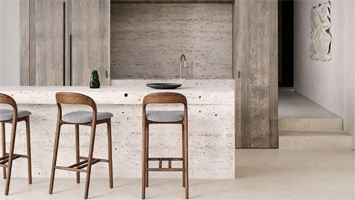
Bar stools are one of those pieces people tend to buy twice: the first pair is chosen for looks, the second for comfort. We have been building wooden chairs in Anji since 2001, and the questions our customers ask about bar stools have barely changed in all that time — will the seat land at the right height, will the footrest be where my feet expect it, and will the joints still be tight in five years. This short guide walks through those questions in the order that actually matters, from the tape measure outward to the wood, the finish and the daily care that keeps a stool looking new. Start With the Seat, Not the Style Every comfortable bar stool begins with a number. Measure from the floor to the underside of your counter or bar top, then subtract roughly 25–30 cm (10–12 inches). That gap is the room your thighs need to slide in and out without brushing the counter. If the gap is smaller, guests end up perching; if it is larger, they lean forward and the backrest does nothing useful. In practice most projects fall into two families: counter height for kitchen islands and breakfast bars, and bar height for dedicated bar counters. Measure the seat height — floor to the top of the seat — rather than the back height, because catalogue numbers sometimes quote the taller figure. Seat height is measured from the floor to the top of the seat, not to the top of the backrest. Setting Counter height Suggested seat height Usual stool type Kitchen island 90 cm (36 in) 60–65 cm (24–26 in) Backless or low back Home bar counter 105 cm (42 in) 75–80 cm (29–31 in) Low back with footrest Commercial bar 110 cm (43 in) 80–85 cm (31–33 in) Upholstered back Multi-use or event seating Varies Pair a 65 cm and a 75 cm frame Stackable, light frame Our own bar-height frames are developed around these two standards in solid ash and rubberwood, so the decision usually comes down to the room rather than the geometry. You can see the current bar-height line here. Cream Upholstered Mid-Century Bar Stool with Curved FootrestAsh-framed stool with cream upholstery, 68 cm seat height and a curved rear-leg footrest, suited to counter and home-bar settings.View Product → The Details That Decide Comfort Where the footrest sits On a chair, the floor does the work. On a stool, the footrest does. It should sit roughly 40–45 cm below the seat top, so the foot lands flat with the knee slightly bent rather than dangling or tucked up. A well-placed footrest takes weight off the thighs and stops guests from hooking their heels around the stretcher, which is the single most common cause of early frame fatigue in busy bars. Seat depth, width and back height A bar stool seat is usually shallower than a dining chair seat — around 38–42 cm is generous enough for a long evening without cutting behind the knee. Width matters more than people expect: 40 cm and up feels relaxed, while anything under 35 cm starts to feel like a perch. Back height is a question of setting. Backless stools disappear under an island and suit short visits; a low-to-mid back gives support for meals and conversation. If the stool will be used for eating rather than perching, choose the back. Choosing the Wood The timber sets the tone of the piece as much as its price. Three choices cover most projects. Ash is the classic bar stool timber. It is dense, takes a bend or a curve cleanly, and shows a long, open grain that reads well under a clear or lightly pigmented finish. European ash in particular machines to a crisp edge, which is why sculpted seats and arched backs are usually made from it. We specify FSC-certified, traceable stock and control moisture content carefully before machining, since a stool leg is a thin section that will move if the wood was not dried properly. Rubberwood is the practical option for volume orders and painted finishes. Its grain is tight and even, it holds a screw well, and it keeps costs sensible for cafés, rental fleets and multi-unit residential projects. It is not a compromise so much as a different job. Walnut-toned finishes give you the warmth and depth of darker timber without the price volatility, and they sit naturally beside stone counters and dark cabinetry. Walnut-Toned Ash Bar Stool for Commercial or Home BarsAsh wood frame and upholstered ergonomic seat in a 68 cm seat height, suitable for bars, counters, and high-top tables.View Product → Finish, Colour and the Room It Lives In Finish is where a stool either blends in or becomes the accent. In residential work, light neutral tones and matte sealers keep an island feeling open, while darker stains anchor a room with strong cabinetry. In commercial settings, the priorities shift: a matte lacquer hides fingerprints better than a high gloss, and a slightly darker seat colour forgives daily wear between deep cleans. It helps to decide the colour family early, before comparing frames, because two stools of identical shape can look like different products in oak-white and forest green. If you are working from a palette, we keep our colour options documented separately from the product pages so that a single reference covers frames, seats and touch-up work. For a deeper look at heights, style families and wood behaviour over time, our workshop notes on wood bar stool selection are worth reading before you finalise a specification. Matching Stools to Homes, Cafés and Hospitality Spaces A home island usually needs two or three stools and a lot of visual quiet. A café needs twelve that can be wiped down, moved and occasionally mistreated. A hotel bar needs something that photographs well and still feels supportive at midnight. Home kitchens: backless or low-back ash stools, 65 cm seat height, clear or natural finish. Cafés and tapas bars: mid-back stools with a footrest, darker seat finish, replaceable seat pads where possible. Hotel and lounge bars: upholstered or saddle-leather seats, sculpted backs, 80 cm and above. Events and multi-use halls: stackable or knock-down frames, small carton packing, consistent colour across batches. If a project mixes heights — say a 90 cm island beside a 105 cm bar counter — choose one design language across both so the room still reads as a set. Versatility is the reason we keep several bar-height frames in the same family rather than a single bestseller. Soft Cushioned Counter-Height Chair with Built-In FootrestRubberwood frame with ash option, cushioned seat and 73 cm seat height, with a built-in footrest for kitchens, cafés, and home bars.View Product → Looking After Wooden Bar Stools Solid timber is forgiving, but it does ask for a little routine. Five habits cover most of it: Wipe spills promptly with a barely damp cloth, then dry — standing water is the enemy of any finish. Check the leg bolts or screws twice a year and tighten gently; a loose joint wears the surrounding wood. Felt pads under the feet protect both hard floors and the leg ends. Keep stools out of direct sun and away from radiators to slow colour shift and moisture movement. Refresh an oiled finish once a year with a thin coat, following the finish supplier's instructions. A Short Checklist Before You Order Counter height measured, seat height calculated, and the 25–30 cm clearance confirmed. Footrest position checked against the seat top. Seat depth and width tested against the people who will use it most. Wood species and finish chosen to suit the traffic and the light in the room. Quantity, spare units and delivery packing agreed in advance. If you would like a second opinion on a specification, our team is happy to look at a plan or a photo of the space and suggest a frame and height combination. You can reach us through the contact page — no obligation, and no sales script. VICO has been manufacturing solid wood seating in Zhejiang since 2001, supplying furniture brands, designers, importers and hospitality projects in more than a hundred countries. We work in FSC-certified ash and rubberwood, with finishes developed for real rooms rather than showrooms. Whether you are ordering two stools for a kitchen island or a few hundred for a bar fit-out, the starting point is the same: the right height, a footrest that works, and a frame built to stay tight. .article-section{font-family:inherit;} .article-section h2{font-size:22px;font-weight:bold;text-align:left;margin-bottom:12px!important;} .article-section h3{font-size:16px;font-weight:bold;text-align:left;margin-bottom:12px;} .article-section p{font-size:16px!important;margin-bottom:12px;} .article-section ul{margin-bottom:12px;list-style-type:disc;list-style-position:inside;padding-left:5px;} .article-section ol{margin-bottom:12px;list-style-type:decimal;list-style-position:inside;padding-left:5px;} .article-section li{list-style:inherit;font-size:16px;margin-bottom:6px;} .article-section table{display:table!important;width:100%;border-collapse:collapse;margin-bottom:16px;} .article-section thead{display:table-header-group!important;} .article-section tbody{display:table-row-group!important;} .article-section tr{display:table-row!important;} .article-section th{display:table-cell!important;font-weight:bold;border:1px solid #cccccc;padding:8px;} .article-section td{display:table-cell!important;border:1px solid #cccccc;padding:8px;text-align:center;} .article-section caption{caption-side:bottom;font-size:16px;margin-bottom:12px;font-style:italic;color:#808080;} .product-card{display:block;margin:20px 0;border:1px solid #e5e7eb;border-radius:10px;overflow:hidden;font-style:normal;background:#fff;box-shadow:0 0 5px rgba(31,41,55,.08)} .pc-inner{display:flex;text-decoration:none;color:inherit;align-items:center;min-height:148px} .product-card .pc-img{width:auto!important;min-width:0!important;max-width:min(36%,240px)!important;height:auto!important;min-height:0!important;max-height:148px!important;aspect-ratio:auto!important;object-fit:contain!important;flex:0 0 auto;display:block;align-self:center} .pc-body{padding:12px 16px;flex:1;min-width:0;display:flex;flex-direction:column;align-self:stretch;justify-content:center} .pc-title{display:block;font-size:15px;font-weight:600;color:#111;margin:0 0 6px;line-height:1.4} .pc-desc{display:-webkit-box;font-size:13px;color:#6b7280;margin:0 0 8px;line-height:1.5;overflow:hidden;-webkit-line-clamp:2;line-clamp:2;-webkit-box-orient:vertical} .pc-cta{display:block;font-size:13px;font-weight:600;color:inherit;margin-top:auto} .pc-inner:hover .pc-title{text-decoration:underline} .article-section a:not(.pc-inner),article a:not(.pc-inner){color:inherit}.pc-cta{color:inherit!important}
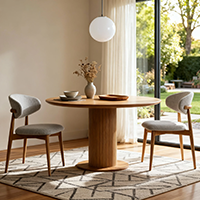
Ask anyone who has hosted a long dinner which piece of furniture works hardest, and the answer is rarely the table. It is the chair — pulled out, pushed in, sat on sideways, leaned back in, wiped down, and asked to look good while doing all of it. A wooden dining chair carries more of that daily load than any other seat in the house, which is why it deserves a little more thought than a colour swatch. Here is how we think about them after more than two decades of building solid wood seating for homes, hotels and brands around the world. What a Wooden Dining Chair Has to Do Every Day A dining chair is a working object. It gets used three or four times a day, often by the same people, and it has to feel the same on the thousandth sitting as it did on the first. That is a question of geometry before it is a question of style. The numbers below are the ones we come back to in every development meeting, because they decide whether a chair feels generous or merely looks it. Seat height: 44–46 cm is the comfortable pairing for a dining table of 72–75 cm. Much lower, and knees rise; much higher, and shoulders lift. Seat depth: 40–45 cm supports the thigh without pressing behind the knee. Seat width: 42–48 cm gives room to shift position during a long meal. Back angle: a recline of roughly 95–105 degrees from the seat keeps people upright at the table but relaxed after dessert. Weight: light enough to pull out with one hand, heavy enough not to slide when someone stands up. Stability matters as much as comfort. Put the chair on a flat floor and press alternate corners — there should be no rocking. Then look underneath: corner blocks, dowels, screws or a properly cut mortise and tenon all tell you how the frame was put together, and how long it is likely to stay that way. The Wood Underneath: Ash, Rubberwood and Coloured Finishes Most of the solid wood dining chairs on the market are made from a small handful of species, and each one behaves differently under the hand and under the family. European ash is the wood we return to most often: it is tough, springy and forgiving, which means a shaped back can be cut thin without becoming fragile. Its open grain and pale honey tone take a clear finish beautifully, and it ages into a soft, almost leathery warmth. Rubberwood is the quieter workhorse. The grain is fine and even, it machines cleanly, and it holds stain and paint without patchiness — which is why so many dark and painted chairs you see in restaurants and busy family kitchens are rubberwood underneath. It is also dense and dimensionally stable, an advantage when chairs travel in containers or sit in air-conditioned dining rooms. How the three wood directions most often used in solid wood dining chairs compare in everyday use. Wood direction Grain and appearance Working character Where it suits best European ash Open, straight grain; pale honey tone Tough and springy, bends well for curved backs Statement dining chairs, arched and sculpted backs Rubberwood Fine, even grain; stains and paints smoothly Dense and stable, machines cleanly Everyday family dining, painted and dark finishes, larger orders Walnut-toned solid wood Deep brown with soft contrast Same solid construction, colour carried in the finish Formal dining rooms and warm, darker schemes Whatever the species, two things matter more than the label. The first is moisture content: wood that is dried and then kept stable will not open a joint in a dry winter. The second is sourcing — FSC-certified, traceable timber is not a marketing line, it is what allows a buyer to answer a customer's question honestly two years later. CY2070C Curved-Back Padded Side Chair in RubberwoodA curved back and padded fabric seat make this rubberwood chair a comfortable, neutral option for dining rooms and cozy reading corners.View Product → Shape and Comfort: Backs, Seats and Armrests Once the wood is settled, the design conversation really begins. The back is where most of it happens. A gently arched back wraps the sitter without trapping them; a semi-enclosed back gives a sense of privacy in a restaurant or a busy open-plan room; an open frame keeps a small dining space feeling light. None of these is better than the others — they simply answer different rooms. The seat is the other half. A solid timber seat is the most honest and the easiest to live with: wipe it, and it is clean. A lightly upholstered seat softens the edge for long dinners and takes the chill off a cold morning. A saddle leather or woven rattan panel adds texture and gives the chair a different personality altogether, which is why we build the same silhouette in several versions rather than inventing a new shape for every material. Armrests deserve a practical note. They are lovely at the head of the table, but a dining armchair needs roughly 10 cm of extra clearance to slide under the tabletop — measure before you commit a whole set to them. CY2047 Ash Wood Dining Chair with Padded SeatSlender ash wood lines and a neutral upholstered seat suit dining rooms and workspaces where chairs need to tuck neatly under the table.View Product → Fitting Chairs to the Table, the Room and the Cupboard Proportion is quiet but decisive. As a rule of thumb, allow 60 cm of table edge per person for comfortable eating, and 55 cm at a push. A 180 cm table seats three per side without elbows going to war; a 140 cm table is happier with two. Chairs should tuck in far enough that the seat sits under the tabletop, but not so far that the back hits the edge. Storage is where dining chairs are usually forgotten. If the room doubles as a home office, or the table is only used at weekends, a stackable chair earns its keep. If the chairs will be shipped, stored or sold flat-packed, a knock-down construction with a small carton protects both the frame and the freight budget. Neither feature should be visible in the design — the best space-saving chairs look exactly like the ones that stay put. CY2073C Flat-Pack Space-Saving Dining ChairA rounded padded seat and rubberwood frame pair with knock-down packaging, making this chair practical for compact dining rooms and storage-conscious apartments.View Product → Colour and Finish: Getting the Whole Room to Agree Finish is the part of a dining chair that people actually live with, and it is worth choosing slowly. Pale natural tones and soft neutrals keep a room open and let the timber grain do the talking; deeper walnut-toned browns bring formality and hide the odd mark; a single saturated note such as forest green gives a plain scheme a memory point. Matte surfaces are more forgiving than high gloss in a room where people eat. The test of a finish is not one chair but six. Order a set from the same production batch where possible, and check that the tone is consistent across seats and backs — grain variation is natural and welcome, a patchwork of shades is not. You can see the directions we currently work in on our colour scheme page, which is updated as new finishes are developed. Care That Keeps a Chair Looking New Solid wood is not delicate, but it does respond to its surroundings. A few habits will add years to a set: Dust with a dry or barely damp cloth; avoid silicone polishes, which build a film that dulls the grain. Keep indoor humidity roughly between 40 and 60 percent — very dry air is what opens joints and hairline cracks. Wipe spills promptly, and never leave a wet cloth sitting on a seat. Fit felt pads under the legs; they protect the floor and the joints from shock. Keep chairs out of direct, long-hour sunlight so one side does not fade ahead of the rest. After the first few months of use, check and gently tighten any bolts — wood settles as it acclimatises. Renew an oiled or waxed finish once a year with a thin coat, worked with the grain. When You Are Buying More Than Four Chairs Specifying dining chairs for a hotel, a restaurant or a retail collection asks different questions: consistency between batches, packing that survives a sea container, replacement parts, and documentation that stands up to a compliance review. We work with brand and design teams on exactly that basis — samples first, then production, with model-level manuals and specification sheets available for each chair so the details do not live only in an email thread. Our download library holds those documents for the current range. It also helps to be honest about the floor. A chair that looks right in a photograph may be wrong for a terrace, a heated floor or a room with underfloor drying. Tell the maker where the chair will live and how often it will be moved, and the recommendation becomes much more useful than a catalogue number. A good wooden dining chair is not the loudest thing in the room. It is the one nobody notices for ten years, because it never wobbles, never squeaks, and still looks like it belongs at that table. Choose the wood for the way it ages, the shape for the way you sit, and the finish for the light in your room — and the rest tends to take care of itself. .article-section p{font-size:16px!important;margin-bottom:12px;} .article-section h2{font-size:22px;font-weight:bold;text-align:left;margin-bottom:12px!important;} .article-section h3{font-size:16px;font-weight:bold;text-align:left;margin-bottom:12px;} .article-section ul{margin-bottom:12px;list-style-type:disc;list-style-position:inside;padding-left:5px;} .article-section ol{margin-bottom:12px;list-style-type:decimal;list-style-position:inside;padding-left:5px;} .article-section li{list-style:inherit;font-size:16px;margin-bottom:6px;} .article-section table{display: table!important;width:100%;border-collapse:collapse;margin-bottom:16px;} .article-section thead{display: table-header-group!important;} .article-section tbody{display: table-row-group!important;} .article-section tr{display: table-row!important;} .article-section th{display: table-cell!important;font-weight:bold;border:1px solid #cccccc;padding:8px;} .article-section td{display: table-cell!important;border:1px solid #cccccc;padding:8px;text-align: center;} .article-section caption{caption-side:bottom;font-size:16px;margin-bottom:12px;font-style:italic;color:#808080;} .product-card{display:block;margin:20px 0;border:1px solid #e5e7eb;border-radius:10px;overflow:hidden;font-style:normal;background:#fff;box-shadow:0 0 5px rgba(31,41,55,.08)} .pc-inner{display:flex;text-decoration:none;color:inherit;align-items:center;min-height:148px} .product-card .pc-img{width:auto!important;min-width:0!important;max-width:min(36%,240px)!important;height:auto!important;min-height:0!important;max-height:148px!important;aspect-ratio:auto!important;object-fit:contain!important;flex:0 0 auto;display:block;align-self:center} .pc-body{padding:12px 16px;flex:1;min-width:0;display:flex;flex-direction:column;align-self:stretch;justify-content:center} .pc-title{display:block;font-size:15px;font-weight:600;color:#111;margin:0 0 6px;line-height:1.4} .pc-desc{display:-webkit-box;font-size:13px;color:#6b7280;margin:0 0 8px;line-height:1.5;overflow:hidden;-webkit-line-clamp:2;line-clamp:2;-webkit-box-orient:vertical} .pc-cta{display:block;font-size:13px;font-weight:600;color:inherit;margin-top:auto} .pc-inner:hover .pc-title{text-decoration:underline} .article-section a:not(.pc-inner),article a:not(.pc-inner){color:inherit}.pc-cta{color:inherit!important}
Walk into almost any dining room furnished in the last decade and there is a good chance the chairs around the table are made of rubberwood. It is the quiet workhorse of the furniture world: plentiful, easy to finish, and strong enough to survive twenty years of dinner parties. Yet plenty of buyers still pause at the name, unsure whether it signals "budget" or "sensible". We have been building wooden chairs in Anji, Zhejiang since 2001, and rubberwood has been part of our range for most of that time. What follows is a practical look at how the wood behaves, where a rubberwood dining chair performs best, and the few details that separate a chair that lasts from one that wobbles within a year. What Exactly Is Rubberwood? Rubberwood, sometimes sold as parawood, comes from Hevea brasiliensis, the same plantation tree that produces natural latex. A tree yields latex for roughly 25 to 30 years. When production begins to fall, it is felled and replanted, and the trunk is sawn and kiln dried for furniture instead of being burned. The timber is therefore a by-product of an existing agricultural cycle rather than a forest cleared for logging. That origin shapes the wood's character. Rubberwood is pale cream in colour, with a straight, even grain and a fine texture. It machines cleanly, holds a fixing well, and accepts stain, lacquer and paint evenly, which is why a rubberwood chair can be finished to look remarkably close to walnut or oak at a fraction of the cost. It is also harder than its reputation suggests. On the Janka scale, which measures the force needed to embed a steel ball in the surface, rubberwood sits at roughly 960, comfortably above pine and close to walnut. For an indoor dining chair, that means edges that resist denting and joints that stay tight through years of use. Two honest caveats. Rubberwood is an indoor species, so it belongs in a dining room or restaurant rather than on an uncovered terrace. And it is unforgiving of shortcuts: timber that is not dried properly will move after assembly, which is why kiln drying and moisture control matter more than the species name on the label. How Rubberwood Compares With Ash, Oak and Walnut Every hardwood has a personality. The comparison below sets rubberwood beside three materials we also work with, so you can see where it wins and where it does not. Approximate Janka hardness values and typical roles for four hardwoods commonly used in dining chairs. Wood Approx. Janka hardness Grain and colour Typical role in a dining chair Rubberwood 960 lbf Straight, even grain; pale cream that stains evenly Everyday dining, contract seating, stained and painted finishes European ash 1,320 lbf Bold open grain; light with warm undertones Visible-frame designs, sculpted and bent forms Oak 1,290 lbf Pronounced grain; honey through to grey Heavier heirloom pieces and statement tables Walnut 1,010 lbf Dark, smooth, subtle grain Premium finishes and feature chairs Read the table as a guide to fit rather than a ranking. Ash and oak offer a more dramatic grain and slightly higher hardness, and walnut brings depth of colour. Rubberwood delivers a stable, uniform surface that takes colour beautifully and keeps the price of a full dining set within reach. For restaurants, rental apartments and family kitchens, that combination of consistency and value is hard to beat. What to Check Before You Buy a Rubberwood Dining Chair Because rubberwood is so widely used, quality varies enormously. These are the points we would examine on any chair, ours or anyone else's. Moisture content. For most export destinations, kiln-dried rubberwood should settle between 8 and 12 percent. Ask for the figure; a supplier who cannot quote it is guessing. Joinery. Look at the leg-to-seat connection. Mortise-and-tenon or dowel joints, reinforced with corner blocks or a mechanical fixing, hold far better than screws driven straight into end grain. Surface preparation. Run a hand along the frame. Properly sanded rubberwood feels smooth and uniform, with no raised grain, visible filler or fuzzy edges around the joints. Finish. Water-based lacquers and modern NC coatings are durable and low in odour. Matte and satin finishes hide everyday scuffs better than high gloss. Traceability. Ask whether the timber is FSC certified and where it was grown. Chain-of-custody documentation is now a routine request from retail and hospitality buyers. Proportions. A standard dining seat sits about 45 to 46 cm (roughly 18 inches) from the floor. Check that the seat height suits your table and that the chair does not collide with the table apron when pushed in. A ten-second physical test tells you a lot: place the chair on a flat floor, press down on one corner, then twist gently. A well-built chair stays silent and rigid. Creaks and movement mean the joints are already working loose. Matching the Chair to the Room The same material can be built in very different ways, and the right spec depends on who will be sitting on it and how often. Everyday Home Dining For a family dining table, comfort and easy cleaning matter most. A gently curved back, a solid seat that can be wiped down, and a warm mid-tone finish suit almost any interior, from Scandinavian-minimal to traditional. This is the territory our modern rubberwood dining chair was designed for: clean lines, a supportive back, and a frame that stays steady when someone leans back after the last course. Vico CY2070C Curved-Back Upholstered Rubberwood Dining ChairA rubberwood side chair with a curved upholstered back and padded seat, suited to dining rooms, home offices, or reading corners.View Product → Restaurants, Cafés and Hotel Projects Commercial seating lives a much harder life. Chairs are pulled across tile, stacked against walls and used a dozen times a day, so weight, joint strength and floor protection matter more than decorative detail. A slightly wider footprint and a reinforced seat frame make a real difference to how long a set stays serviceable. Our space-saving rubberwood dining chair was developed with that rhythm in mind. Vico CY2073C Space-Saving Flat-Pack Rubberwood Dining ChairFlat-pack rubberwood chair with a rounded cushioned seat and backrest, optimized for compact packing, online fulfillment, and small living spaces.View Product → Compact Homes, Pop-Ups and Ship-Ready Orders In small apartments, short-term rentals and event venues, storage is often the deciding factor. Knock-down construction that assembles with basic tools, plus compact cartons that stack neatly in a container, solves two problems at once: the room stays flexible, and freight costs stay predictable. Our small-box KD rubberwood chair is the version we build for exactly that situation. Vico CY2074C Flat-Pack Small-Box Rubberwood Dining ChairA knock-down rubberwood dining chair in a compact carton, built for e-commerce retail, high-volume shipping, and space-conscious apartment living.View Product → Colours, Finishes and Day-to-Day Care Rubberwood's pale, even surface is one of its advantages: it can be stained to a natural tone, brushed into a walnut shade, or painted in a deep forest green without the grain fighting the colour. Because colour choices carry through a whole collection, we manage them as a separate part of the range, and you can browse the current palette on our colour scheme page. Looking after a finished rubberwood chair is undemanding: Dust weekly with a soft cloth; wipe spills with a barely damp cloth and dry immediately. Never soak the wood or use abrasive cleaners, ammonia or solvent-heavy polishes. Keep chairs out of direct sunlight and away from radiators to limit colour shift and shrinkage. Fit felt pads under the feet to protect hard floors and reduce wear on the legs. If the chair is knock-down, re-tighten the fittings after the first month of use. Only apply oil or wax if the finish is oil-based; lacquered surfaces need nothing but a wipe. Buying at Scale: What We Ask Our Customers Most of the people who contact us are not shopping for a single chair. They are sourcing for a restaurant rollout, a retail range or a hospitality refurbishment, and they need to know that the twentieth container will match the first. That is the part of the job that takes years to learn, and it is the reason our workshop in Anji still combines modern machinery with hand finishing. You can read more about how we work. When a buyer sends us a brief, we usually come back with questions about the space, the expected daily use, the seat height relative to the table, the finish, and how the chairs will be packed and shipped. Answer those early and the specification practically writes itself. Rubberwood makes that conversation easier, because it is consistent to machine, predictable to finish and available in the volumes a project needs. A rubberwood dining chair is rarely the most glamorous piece in the room, and that is precisely the point. It is stable, comfortable, easy to maintain and available in a finish that suits the space it lives in, whether that is a family kitchen or a forty-cover restaurant. Judge the moisture content, the joinery and the finish rather than the name of the species, and you will end up with seating that quietly does its job for years. .article-section table{display: table!important;} .article-section thead{display: table-header-group!important;} .article-section tbody{display: table-row-group!important;} .article-section tr{display: table-row!important;} .article-section th{display: table-cell!important;} .article-section td{display: table-cell!important;} .article-section table caption{caption-side:bottom;font-size:16px;margin-bottom:12px;font-style:italic;color:#808080;} .article-section th{font-weight:bold;border:1px solid #cccccc;padding:8px;} .article-section td{border:1px solid #cccccc;padding:8px;text-align: center;} .article-section ol{margin-bottom:12px;list-style-type:decimal;list-style-position:inside;padding-left:5px;} .article-section ul{margin-bottom:12px;list-style-type:disc;list-style-position:inside;padding-left:5px;} .article-section li{list-style:inherit;font-size:16px;margin-bottom:6px;} .article-section h2{font-size:22px;font-weight:bold;text-align:left;margin-bottom:12px!important;} .article-section h3{font-size:16px;font-weight:bold;text-align:left;margin-bottom:12px;} .article-section p{font-size:16px!important;margin-bottom:12px;} .product-card{display:block;margin:20px 0;border:1px solid #e5e7eb;border-radius:10px;overflow:hidden;font-style:normal;background:#fff;box-shadow:0 0 5px rgba(31,41,55,.08)} .pc-inner{display:flex;text-decoration:none;color:inherit;align-items:center;min-height:148px} .product-card .pc-img{width:auto!important;min-width:0!important;max-width:min(36%,240px)!important;height:auto!important;min-height:0!important;max-height:148px!important;aspect-ratio:auto!important;object-fit:contain!important;flex:0 0 auto;display:block;align-self:center} .pc-body{padding:12px 16px;flex:1;min-width:0;display:flex;flex-direction:column;align-self:stretch;justify-content:center} .pc-title{display:block;font-size:15px;font-weight:600;color:#111;margin:0 0 6px;line-height:1.4} .pc-desc{display:-webkit-box;font-size:13px;color:#6b7280;margin:0 0 8px;line-height:1.5;overflow:hidden;-webkit-line-clamp:2;line-clamp:2;-webkit-box-orient:vertical} .pc-cta{display:block;font-size:13px;font-weight:600;color:inherit;margin-top:auto} .pc-inner:hover .pc-title{text-decoration:underline} .article-section a:not(.pc-inner),article a:not(.pc-inner){color:inherit}.pc-cta{color:inherit!important}
A padded armchair is easy to fall for in a showroom and easy to regret a year later. The cover catches your eye first, but the details that decide comfort sit underneath: the frame, the foam, the angle of the back, the height of the arms. We have been building chairs in Anji, Zhejiang since 2001, and most questions customers ask us about padded seating come back to those four points. What follows is the set of checks we run ourselves, whether you are furnishing a reading corner at home or specifying seating for a hotel project. What Makes a Padded Armchair Comfortable Comfort is not the same thing as softness. A chair that feels wonderful for ten minutes can be tiring after an hour if the seat sinks too far or the back pushes your shoulders forward. Four elements carry most of the weight. The frame. A rigid hardwood frame holds the seat and back where the designer intended them. If it flexes, the cushion geometry moves with it. Seat height and depth. Feet flat on the floor, and a front edge that stays clear of the back of your knees. Cushion construction. Density, thickness and any wrapped top layer decide how the seat behaves after a few thousand sittings. Arms and back angle. Arms give you something to lean on when you stand up; the back angle decides whether you sit or slowly slide forward. Get those right and the fabric becomes a question of taste rather than damage control. The Frame Underneath: Solid Wood Still Wins Almost every padded armchair we make starts with solid wood, usually European ash or rubberwood. Ash bends cleanly, sands to a fine finish and holds a joint without splitting. Every board is checked for moisture content before it reaches the machining line, because timber that is too wet will move after assembly and pull the upholstery out of shape. We source from FSC certified forests with traceable supply chains and keep auxiliary materials non-toxic. Precise machining keeps joints square and tight, while hand finishing softens the edges your hands and forearms actually touch. Our company background explains how the workshop is organised. Seat Height, Depth and Cushion Density For lounging, a seat height of 40 to 44 cm suits most adults, while an armchair used at a dining table usually sits around 45 cm. Seat depth is the number people underestimate. Somewhere between 48 and 52 cm supports the thighs without making you perch on the front edge, and past 55 cm the chair starts to feel like a chaise longue. Cushion density is where cheap chairs give themselves away. Seat foam in the 30 to 38 kg/m3 range with a softer top layer holds its shape and still feels generous on the first sit. Very soft foam flattens within a year; very firm foam lasts but never quite relaxes. That layered build is what we used on our generously cushioned wooden armchair, deep enough for long evenings yet springy enough to let you stand up easily. Vico CY2037 Textured Fabric Padded Wooden Side ChairA rubberwood side chair with curved backrest, arm supports, and honey-toned finish; generous fabric-wrapped cushioning suits dining rooms, living spaces, or cafes.View Product → Arms and Backs: Where the Padding Earns Its Name An armrest is a lever. Roughly 20 to 25 cm above the seat is the sweet spot: high enough to take some weight as you rise, low enough to leave room for a book or a cup. Padded tops matter more than people expect, especially in cool rooms where bare wood feels uninviting against a forearm. The back angle is the other half of the story. A reclined 105 to 110 degrees reads as relaxed but is still easy to leave, which is why it works in private living rooms and hotel bedrooms alike. Our minimalist armrest armchairs keep those proportions deliberately restrained, with slim padded arms that support without swallowing the shape of the room. CY2030B Minimalist Ashwood Armrest Chair with Padded SeatSlim padded armrests and an ashwood frame keep this versatile chair refined for dining rooms, bedrooms, offices, or living rooms while supporting everyday use.View Product → Which Room, Which Padded Armchair The right padded armchair depends less on fashion than on the job it has to do. Living rooms and reading corners Look for a deeper seat, a softer cushion and a back you can lean into. One good armchair beside a window often earns its space more than a second sofa. Studies and work corners Here the chair has to support a more upright posture: a slightly firmer seat, a taller back, and shorter arms that clear a desk edge. Our elegant-form studio armchair was drawn around that brief, with a sculpted wooden frame, enough padding for a long afternoon of work, and lines clean enough for a living room. CY2066 Solid Ashwood Ergonomic Studio Armchair with Open-Loop BackA solid ashwood armchair with integrated armrests and neutral upholstery, offering ergonomic support and a refined silhouette for curated studios or contemporary living spaces.View Product → Hospitality and contract spaces Hotels, lounges and waiting areas punish weak construction. Frame rigidity and cleanable covers matter more than novelty here. Specify a fabric of at least 30,000 Martindale rubs, and keep the palette simple so chairs can be rotated between rooms without looking mismatched. Comparing Padded Armchair Types at a Glance The table below summarises the proportions we use most often in project conversations. Treat it as a starting point, since body size, table height and room layout all shift the numbers slightly. Typical proportions for padded armchair types, based on our own production ranges. Armchair type Seat height Seat depth Cushion feel Best suited to Lounge or accent armchair 40-44 cm 50-55 cm Soft, layered Living rooms, bedrooms, hotel suites Dining armchair 45-47 cm 45-48 cm Medium firm Dining tables, restaurants Studio or desk armchair 44-46 cm 46-50 cm Firm with soft top Studies, home offices, libraries Contract or lobby armchair 42-45 cm 50-54 cm Firm, high resilience Hotels, lounges, waiting areas Fabric, Leather and the Question of Colour Once frame and foam are settled, the cover is where an armchair becomes personal. Woven fabric is warmer to the touch, easier to repair and hides small marks better than smooth leather. Leather wins on cleaning and on the patina it develops over the years. For homes, look for at least 25,000 Martindale rubs; for contract use, 30,000 and above. Our guide to choosing an upholstered fabric seat covers weave, filling and maintenance in more depth. Colour is the last decision and the one most likely to date. Neutral tones and natural wood finishes age better than a matched set of strong colours. Care That Keeps Padding Looking New Padded furniture rewards a small amount of routine. Vacuum the seat and back every few weeks with a soft brush attachment. Rotate loose cushions where the design allows, so one spot does not take all the weight. Blot spills immediately rather than rubbing, which pushes liquid deeper into the foam. Keep the chair out of direct sunlight and check joint bolts once a year. None of this takes long, and it is far cheaper than replacing a chair that only needed attention. Buying Padded Armchairs in Larger Quantities Much of our work is with brands, designers, importers and hospitality buyers who need consistency across a project rather than a single chair. A controlled colour range. Finishes and upholstery are managed as a separate dimension of the product line, so a palette can be repeated across models and reordered later. Documentation. Each model has its own specification and manual, kept current in our download section for procurement teams. Transport efficiency. Several armchairs are built as knock-down or stackable designs, which reduces carton volume and container cost. If a project needs a variation on an existing model, that is a normal conversation for us rather than an exception. Two decades of making wooden seating has taught us that most good products come out of a customer's specific problem. A padded armchair should be the easiest piece in the room to live with. Check the frame, respect the numbers behind the seat, and choose a cover that suits how the room is really used, and the chair will keep earning its place for years. If you would like to compare a few models and finishes, write to [email protected] or call +86 150 6762 0900. We are happy to share what we know. .article-section table{display: table!important;} .article-section table{border-collapse:collapse;width:100%;} .article-section thead{display: table-header-group!important;} .article-section tbody{display: table-row-group!important;} .article-section tr{display: table-row!important;} .article-section th{display: table-cell!important;font-weight:bold;border:1px solid #cccccc;padding:8px;} .article-section td{display: table-cell!important;border:1px solid #cccccc;padding:8px;text-align: center;} .article-section caption{caption-side:bottom;font-size:16px;margin-bottom:12px;font-style:italic;color:#808080;} .article-section h2{font-size:22px;font-weight:bold;text-align:left;margin-bottom:12px!important;} .article-section h3{font-size:16px;font-weight:bold;text-align:left;margin-bottom:12px;} .article-section p{font-size:16px!important;margin-bottom:12px;} .article-section ul{margin-bottom:12px;list-style-type:disc;list-style-position:inside;padding-left:5px;} .article-section ol{margin-bottom:12px;list-style-type:decimal;list-style-position:inside;padding-left:5px;} .article-section li{list-style:inherit;font-size:16px;margin-bottom:6px;} .product-card{display:block;margin:20px 0;border:1px solid #e5e7eb;border-radius:10px;overflow:hidden;font-style:normal;background:#fff;box-shadow:0 0 5px rgba(31,41,55,.08)} .pc-inner{display:flex;text-decoration:none;color:inherit;align-items:center;min-height:148px} .product-card .pc-img{width:auto!important;min-width:0!important;max-width:min(36%,240px)!important;height:auto!important;min-height:0!important;max-height:148px!important;aspect-ratio:auto!important;object-fit:contain!important;flex:0 0 auto;display:block;align-self:center} .pc-body{padding:12px 16px;flex:1;min-width:0;display:flex;flex-direction:column;align-self:stretch;justify-content:center} .pc-title{display:block;font-size:15px;font-weight:600;color:#111;margin:0 0 6px;line-height:1.4} .pc-desc{display:-webkit-box;font-size:13px;color:#6b7280;margin:0 0 8px;line-height:1.5;overflow:hidden;-webkit-line-clamp:2;line-clamp:2;-webkit-box-orient:vertical} .pc-cta{display:block;font-size:13px;font-weight:600;color:inherit;margin-top:auto} .pc-inner:hover .pc-title{text-decoration:underline} .article-section a:not(.pc-inner),article a:not(.pc-inner){color:inherit}.pc-cta{color:inherit!important}
Hello, and welcome. We are VICO, a solid wood chair manufacturer based in Anji, Zhejiang, and we have been building chairs for international brands and designers since 2001. In that time, one brief has come up again and again: give us an accent chair that looks right beside a dining table and just as right in a living room corner. That is what most people are really asking for when they search for a dining living room accent chair, not two chairs, but one frame that quietly does both jobs. Here is the reassuring part: this is not a compromise. It is a design problem with a real answer, and the answer begins with understanding what each room asks of the very same chair. What a Dining Living Room Accent Chair Really Means An accent chair is, by definition, the chair that does not match the set. It carries the colour, the texture or the silhouette that the rest of the room borrows from. At a dining table, that role usually falls to a host chair or to a pair of chairs at either end. In a living room, it is the piece that fills the corner by the window, often turned slightly towards the sofa so conversation can open up. In an open-plan home those two positions sit barely three metres apart, and one chair is expected to serve both. That is why the phrase has become so common in search. People are not shopping for a category; they are shopping for a chair that still looks intentional when you glance up from the kitchen island and when you look across from the sofa. In practice, a chair carries that double duty when three conditions are met. Its back is upright enough to support a long meal. Its arms, or its armless profile, let the seat slide under a table top. And its finish is calm enough to sit beside upholstery without competing with it. Why Solid Wood Bridges the Two Rooms So Naturally Timber has an advantage here that few other materials share. A solid wood frame with a matte finish reads warm in a living room and structured at a dining table, which is precisely the balance a dual-purpose accent chair needs. It also ages honestly. A chair that is pulled out, pushed back and sat in every day should look better after a decade of use, not worse. Material choices decide whether that promise holds. We build mainly in European ash and rubberwood, buy FSC-certified timber with traceable origins, grade each board by hand, and bring moisture content under control before the first cut is made. Ash gives a long, clean grain that suits slim frames and sculpted backs; rubberwood brings density and stability, which matters when a project needs eight chairs rather than one. For the living-room side of the brief, that thinking shows up in frames built for a slower kind of sitting: CY2032Step into a haven of relaxation with this exquisite ash wood chair.View Product → A chair designed this way can stand alone in a reading corner all week and still be pulled up to the table when guests arrive, which is exactly the flexibility an open plan rewards. Scale and Proportion: The Numbers That Decide Everything Before colour and texture, measure. Most accent chairs that disappoint in an open plan fail on dimensions rather than on looks, and the figures below are the ones we check first with every new model. A quick comparison of what one accent chair has to satisfy in two adjacent zones. Consideration At the dining table In the living room Seat height 44 to 46 cm, elbows just above the table 40 to 44 cm, slightly lower for lounging Arm clearance Total arm height under roughly 65 cm Arms are welcome and frame the corner Seat depth 42 to 46 cm, supportive, no knee pressure 48 to 55 cm, deeper cushions suit long sitting Back height Medium back, around 80 to 95 cm overall Visual weight matters more than the number Footprint 45 to 55 cm wide, so six chairs still fit 60 to 75 cm wide if it stands alone Frame movement Rigid, with joints that survive being dragged Light enough to reposition with one hand Read the table as a conversation, not a rule book. A frame with a 46 cm seat height and a low arm can be a perfect dining chair and an awkward lounge chair if its seat is shallow and its back too vertical. The trick is to find the middle: a seat that supports a three-course dinner and still feels generous an hour later with a book. Colour, Texture and the Accent Chair's Real Job An accent chair earns its name by carrying colour. In an open plan it becomes the punctuation between two zones, so a single saturated frame often achieves more than a whole matching set. Deep forest green beside pale oak, a walnut-toned frame against a cream sofa, or natural ash with a woven rattan back and a leather seat: each of these gives the eye somewhere to rest. Finish is not an afterthought for us. We manage colour as a separate programme and apply matt lacquers that tolerate daily contact, because an accent chair is touched, moved and wiped far more often than a sofa. If you would like a fuller walkthrough of how proportion and sightlines shape a living room, our guide to choosing a design chair that anchors your living space goes into much more detail. A colour-led frame such as this one shows how much a single chair can do in a room that has to work twice as hard: CY2077CBring the tranquility of the outdoors into your living space with this stunning accent chair, a perfect fusion of natural inspiration and modern design. Its deep, fore...View Product → Placed at the end of a dining table, the same chair reads as a deliberate host seat; moved two metres into the living zone, it becomes the colour note the whole room answers to. Comfort Rules That Hold in Both Rooms Comfort is where dual-purpose chairs are usually lost. These three checks cover most of it. Seat depth and back angle A dining chair wants a back angle of roughly 100 to 105 degrees so you stay upright through a meal. A living room chair can relax to 110 degrees or more. Somewhere near 105 degrees, with a gently curved back, gives you a chair that works at both tables. Arms, elbows and doorways Arms should clear the table apron when you slide the chair in, and still leave room for your elbows when you sit back. Check doorway widths and turning circles too. A beautiful armchair that cannot be carried into the room has failed before it is used. Weight, glides and movement Timber frames are stable but should still move easily. Felt or nylon glides protect flooring, and a frame light enough to lift with one hand is a genuine advantage in an open plan where chairs travel between zones every day. A Practical Checklist Before You Buy Measure the table top height and the clearance beneath its apron; the chair arms should pass under with a few centimetres to spare. Match seat height to the people who use the table most; most dining seats land between 44 and 46 cm. Leave at least 90 cm of clear space behind a pulled-out chair so nobody is trapped against a wall. Decide which role the chair plays most often; when in doubt, choose the quieter colour and the more interesting shape. Sit in it for ten minutes rather than ten seconds, and notice where the back edge meets your shoulder blades. Ask what happens in five years: replaceable covers, touch-up finishes, spare glides and available parts. For Designers, Brands and Buyers: One Range, Two Zones Sourcing chairs for both rooms from one manufacturer keeps a project coherent. Our range is organised so a dining chair, a bar chair and a leisure chair can share the same timber, the same finish and the same design language, which means you can seat a dining area, a kitchen counter and a lounge corner without the palette drifting. For buyers, practicalities count as much as design. Several models are disassemblable, stackable or packed in small cartons, which reduces container volume and storage cost. Model manuals are available through our download library, colour options are managed as a separate programme, and documents are updated as the line develops. If you would like to know more about how we work, you can read our story and our production approach. Many of the teams we supply use the same simple formula: a matched pair or set for the table, and one accent chair to break the symmetry. CY2047This dining chair blends soft curves and slender lines, resulting in a piece that feels both modern and timeless. Crafted entirely from ash wood, it showcases the mate...View Product → That combination keeps the dining side disciplined and gives the living side its personality, which is usually the outcome clients are quietly hoping for. A chair that serves both a dining room and a living room is not a trick and it is not a compromise. It is a chair that was measured carefully, finished patiently and built from timber that can take twenty years of daily use. So start with the numbers, then let colour do the talking. And if you are sourcing for a brand, a hotel group or a retail programme, we are always glad to talk through timber, finish and packing. That is the part of the job we have been doing since 2001. .article-section table{display: table!important;} .article-section thead{display: table-header-group!important;} .article-section tbody{display: table-row-group!important;} .article-section tr{display: table-row!important;} .article-section th{display: table-cell!important;font-weight:bold;border:1px solid #cccccc;padding:8px;} .article-section td{display: table-cell!important;border:1px solid #cccccc;padding:8px;text-align: center;} .article-section caption{caption-side:bottom;font-size:16px;margin-bottom:12px;font-style:italic;color:#808080;} .article-section ol{margin-bottom:12px;list-style-type:decimal;list-style-position:inside;padding-left:0;} .article-section ul{margin-bottom:12px;list-style-type:disc;list-style-position:inside;} .article-section li{list-style:inherit;font-size:16px;margin-bottom:6px;} .article-section h2{font-size:22px;font-weight:bold;text-align:left;margin-bottom:12px!important;} .article-section h3{font-size:16px;font-weight:bold;text-align:left;margin-bottom:12px;} .article-section p{font-size:16px!important;margin-bottom:12px;} .product-card{display:block;margin:20px 0;border:1px solid #e5e7eb;border-radius:10px;overflow:hidden;font-style:normal;background:#fff} .pc-inner{display:flex;text-decoration:none;color:inherit;align-items:center;min-height:120px} .pc-img{width:160px;min-width:160px;aspect-ratio:4/3;height:auto;min-height:120px;object-fit:cover;flex-shrink:0;display:block;align-self:stretch} .pc-body{padding:12px 16px;flex:1;min-width:0;display:flex;flex-direction:column;align-self:stretch;justify-content:center} .pc-title{display:block;font-size:15px;font-weight:600;color:#111;margin:0 0 6px;line-height:1.4} .pc-desc{display:-webkit-box;font-size:13px;color:#6b7280;margin:0 0 8px;line-height:1.5;overflow:hidden;-webkit-line-clamp:2;line-clamp:2;-webkit-box-orient:vertical} .pc-cta{display:block;font-size:13px;font-weight:600;color:inherit;margin-top:auto} .pc-inner:hover .pc-title{text-decoration:underline} .article-section a:not(.pc-inner),article a:not(.pc-inner){color:inherit}.pc-cta{color:inherit!important}
A curved back padded living room chair is the quiet workhorse of a comfortable home. Nobody compliments it the way they compliment a coffee table, but everyone notices when it is missing. Sit in a flat, hard-backed chair for an hour and your lower back starts negotiating; sit in a well-made curved back chair with honest padding and the conversation simply keeps going. We are VICO, a wooden chair manufacturer based in Anji, Zhejiang, and we have been building seating for furniture brands, importers and designers around the world since 2001. Over more than two decades we have learned that the gap between a chair people love and a chair people merely tolerate comes down to a handful of details you can measure rather than guess. This guide walks through them: what the curve does for posture, what sits underneath the padding, how to size a chair for a real living room, and what to check before you buy one piece or specify a container. What a Curved Back Really Does for Comfort A curved back is not decoration. When a backrest arcs gently, it makes contact with a much larger area of your back than a flat panel does, so body weight is spread instead of being concentrated in two or three pressure points. The soft swell near the lower section supports the natural inward curve of the lumbar spine, which is exactly where most discomfort begins. Add a slight recline, usually somewhere between 100 and 105 degrees, and the upper body settles back rather than perching forward. The shape also changes how a chair gets used. People stay in a curved back chair for longer stretches without shifting, which is why the design has survived every furniture trend of the past century. We wrote about that endurance in our own note on why the rounded back never goes out of style, and the conclusion still holds: comfortable shapes get used, and shapes that get used get kept. Three measurements matter more than any marketing language: Back height: most living room chairs land between 70 and 90 cm, tall enough to lean into and low enough to keep sightlines open. Seat height: 42 to 45 cm suits most adults; add 2 to 3 cm if the chair will sit on a thick rug. Seat depth: 48 to 52 cm gives thigh support without pressing behind the knees. If you would like to see how we translate those three numbers into a finished piece, the arched back chair in our collection is a good place to start. CY2002Showcases a refined silhouette with smooth, curved armrests and a gently rounded backrest, this timeless wooden chair design adds warmth and sophistication to any dini...View Product → Frames, Foam and Fabric: What Sits Under the Padding Padding only feels good when everything below it behaves. A curved back chair carries more load than a plain side chair because the body sinks into it, so the frame, the joinery and the foam all have to be chosen with that in mind. The frame comes first We build our frames from solid European ash and rubberwood, kiln dried and held at a moisture content between 8 and 12 percent. That range matters: timber that arrives too wet keeps moving after the chair reaches a dry, heated room, and movement in a frame shows up as cracks, squeaks and a seat that slowly loosens. We buy from FSC certified, fully traceable sources and inspect every board before it reaches the machining line. Padding is a numbers game Foam is where cheaper chairs save money, and it is the first thing to fail. High resilience foam in the 30 to 40 kg/m3 range keeps its loft for years, while low density foam collapses into a hollow within months. For a living room chair, a seat cushion of 8 to 12 cm wrapped in a thin layer of wadding gives a soft first impression without losing support. Key components of a curved back padded living room chair and the quality signals worth checking before you buy or specify. Component What Good Looks Like Why It Matters Backrest curve Continuous arc with a soft lumbar swell Contact along the whole spine instead of two pressure points Seat foam 30 to 40 kg/m3 high resilience foam, 8 to 12 cm thick Resists flattening after months of daily use Frame timber Solid ash or rubberwood, dried to 8 to 12 percent moisture Prevents cracking, warping and squeaks Joinery Glued and screwed mortise-and-tenon or dowel joints A padded chair takes more load than a plain side chair Upholstery Tightly woven fabric or full grain leather over wadding Protects the foam and keeps the seat edge crisp Legs and base Four solid legs with felt or nylon glides Spreads weight and protects wood floors Fabric choice finishes the job. Tightly woven upholstery and full grain leather hold their shape around a curved seat edge; loose, stretchy weaves wrinkle where the arc bends. If you would rather study the layers than read about them, the generous cushioned chair in our range shows how they come together. CY2037Presents a refined silhouette, pairing soft upholstery with a smooth rubberwood frame, this wooden chair curved backrest flows seamlessly into arm supports, creating a...View Product → Sizing a Padded Chair for a Real Living Room A living room chair has to share space, and padded chairs are naturally bulkier than side chairs. A few practical rules we share with designers: Leave 45 to 60 cm of walking space around the chair once it is in place. In a seating group, keep the front edge of the chair within 30 cm of the sofa front so conversation stays comfortable. Angle the chair slightly toward the centre of the room rather than pushing it square against a wall. In small rooms, choose a chair with visible legs and an open base; it reads lighter than a fully skirted version. Comfort also depends on pairing. A softly curved leisure chair beside a crisp sofa works because the contrast is deliberate; two soft shapes side by side tend to look tired. For compact apartments and guest rooms, a chair light enough to move between the living room and the bedroom earns its floor space twice over. Our cozy leisure wooden chair was designed for exactly that kind of flexible use. CY2032Step into a haven of relaxation with this exquisite ash wood chair.View Product → Fabric, Colour and the Room Around It Colour is the last decision and often the one people regret fastest. Warm neutrals such as oatmeal, sand and greige keep a padded chair in the background and let the wood grain speak, while a deeper forest green or a walnut tone makes the chair a focal point. If the chair sits on a light rug in a room with strong daylight, choose a fabric with a little texture, because flat surfaces show every mark. Because so many of our customers specify colour at the same time as shape, we manage it as its own step in the process. You can browse the options on our colour scheme pages, and we are always glad to match a sample you send us. Care That Keeps the Padding Looking New Padded chairs age well when they are treated like furniture rather than a spot to drop bags. A short routine is enough: Vacuum the seat and back weekly with a soft brush attachment to lift dust out of the weave. Blot spills immediately with a clean cloth; rubbing pushes liquid deeper into the foam. Rotate or flip loose cushions every few months so the foam recovers evenly. Keep the chair out of direct sun and at least 30 cm from radiators, since heat dries both fabric and timber. Check the leg fixings once a year and tighten them gently; a wobbling base is easier to fix early. With that routine, a good padded chair stays comfortable for a decade or more, and the frame usually outlasts the upholstery by a wide margin. Buying One Chair or a Thousand Most people who contact us are not shopping for a single seat. They are brand buyers, importers and interior designers who need a curved back padded chair that can be repeated across a project, a catalogue or a hotel floor plan, and repeated consistently. That is the part of the work we know best: standardised models, documented dimensions, careful colour control and packaging designed for long distance shipping. Several of our models ship with knock down construction, small carton sizes and stackable frames, which lowers freight volume and warehouse cost without changing what the customer sees on the showroom floor. Dimension drawings, care notes and model manuals are available through our download section, and our team can prepare samples before a full order is placed. If you are weighing a new padded chair for a project of any size, tell us the room, the seat height you need and the look you have in mind. Chances are we have already built something close to it. Comfort in a living room is rarely about one dramatic purchase. It is about a chair that holds you properly, asks nothing of your attention, and still looks right five years later. That is the standard we build to, and it is the reason we still enjoy drawing that curve after more than twenty years in the workshop. .article-section table{display: table!important;} .article-section thead{display: table-header-group!important;} .article-section tbody{display: table-row-group!important;} .article-section tr{display: table-row!important;} .article-section th{display: table-cell!important;font-weight:bold;border:1px solid #cccccc;padding:8px;} .article-section td{display: table-cell!important;border:1px solid #cccccc;padding:8px;text-align: center;} .article-section caption{caption-side:bottom;font-size:16px;margin-bottom:12px;font-style:italic;color:#808080;} .article-section ol{margin-bottom:12px;list-style-type:decimal;list-style-position:inside;padding-left:0;} .article-section ul{margin-bottom:12px;list-style-type:disc;list-style-position:inside;} .article-section li{list-style:inherit;font-size:16px;margin-bottom:6px;} .article-section h2{font-size:22px;font-weight:bold;text-align:left;margin-bottom:12px!important;} .article-section h3{font-size:16px;font-weight:bold;text-align:left;margin-bottom:12px;} .article-section p{font-size:16px!important;margin-bottom:12px;} .product-card{display:block;margin:20px 0;border:1px solid #e5e7eb;border-radius:10px;overflow:hidden;font-style:normal;background:#fff} .pc-inner{display:flex;text-decoration:none;color:inherit;align-items:center;min-height:120px} .pc-img{width:160px;min-width:160px;aspect-ratio:4/3;height:auto;min-height:120px;object-fit:cover;flex-shrink:0;display:block;align-self:stretch} .pc-body{padding:12px 16px;flex:1;min-width:0;display:flex;flex-direction:column;align-self:stretch;justify-content:center} .pc-title{display:block;font-size:15px;font-weight:600;color:#111;margin:0 0 6px;line-height:1.4} .pc-desc{display:-webkit-box;font-size:13px;color:#6b7280;margin:0 0 8px;line-height:1.5;overflow:hidden;-webkit-line-clamp:2;line-clamp:2;-webkit-box-orient:vertical} .pc-cta{display:block;font-size:13px;font-weight:600;color:inherit;margin-top:auto} .pc-inner:hover .pc-title{text-decoration:underline} .article-section a:not(.pc-inner),article a:not(.pc-inner){color:inherit}.pc-cta{color:inherit!important}
You order a chair online. The listing says it is a solid wood chair, and the photo looks good. Then it arrives, and after a week of use you realize the seat is a little high, the backrest stops short of your lower back, and the finish already shows marks. Most home chair mistakes come from treating every chair as interchangeable. A home chair has to work with a specific table height, a specific room, and a specific sitting habit. This guide walks through the chair types you will actually encounter, the wood species that matter, the dimensions you can verify before buying, and how to match all of it to the rooms you are furnishing. A practical home chair buying guide can take you further into the details, but the fundamentals here are the ones that prevent the biggest errors. What counts as a home chair? The phrase "home chair" covers several seating forms, and the differences matter more than the name. Most households need two or three types at once: Dining chairs for daily meals, with a seat height around 45–48 cm and a back that supports the lumbar area without blocking movement. Accent and leisure chairs for living rooms, bedrooms, and reading corners, where depth and cushioning matter more than table clearance. Bar and counter stools for kitchen islands and home bars, with seat heights from 65 cm to 80 cm and a footrest that takes the strain off your legs. Armchairs and side chairs for work, study, or flexible seating, balancing upright support with the ability to sit for longer stretches. If you mix up these categories, the problem shows up in minutes. A lounge chair at a dining table leaves you reaching for the tabletop; a dining chair used as a reading chair has a seat that is too shallow for an hour of relaxed sitting. Decide which room you are furnishing first, then look within that category. Ash Wood Dining Chair with Upholstered Seat and Curved BackrestThis dining chair from the CY2047 series combines ash wood construction with a padded fabric seat and a gently rounded back, making it suitable for dining areas or workspaces where comfort and timeless style are priorities.View Product → Wood species: what ash and rubberwood actually give you Two woods dominate the practical home chair market: European ash and rubberwood. They are both hardwoods, but they suit different buyers, different finishes, and different budgets. European ash for visible grain and strength Ash is lighter than oak but comparable in strength, with a straight, pronounced grain that looks good under clear or oil finishes. It bends well for curved backs, which is why you see it in arched and sculptural chair silhouettes. If the frame is exposed and the design is the centerpiece, ash gives the chair a structural identity that painted or darkly stained woods hide. Rubberwood for uniformity and value Rubberwood comes from plantation trees that have completed their latex-producing cycle, which makes it one of the more sustainable hardwood sources you can specify. Its grain is quiet and uniform, so it takes painted or walnut-toned finishes without competing with the color. For households that want a consistent set of chairs across a large table or a commercial space that needs repeatable batches, rubberwood is the predictable choice. Both species need controlled moisture content during production to avoid warping later. A manufacturer that selects each board and states its moisture control process is doing real quality work, not just adding marketing language. VICO, for example, makes precisely that claim, and it is the kind of detail worth asking your supplier about. Comfort you can measure before you buy Comfort is not a mysterious quality. It comes down to a few numbers that you can check against your own body and your table. A chair that passes the dimension check may still feel stiff or flimsy, but a chair that fails it will always feel wrong. Typical home chair dimensions by use; always compare with the product sheet before ordering. Measurement Dining chair Leisure or accent chair Bar stool Seat height 45–48 cm 40–44 cm 65–80 cm Seat depth 40–45 cm 45–50 cm 35–40 cm Typical back Lumbar curve Optional, arched Low or none The test is simple. Sit with your feet flat on the floor and your knees at roughly 90 degrees. Your weight should rest on the sitz bones, not on the back of your thighs. The backrest should start to support your lower spine within a couple of centimeters of your natural sitting position, and the front edge of the seat should leave a small clearance behind your knees. If a chair meets these three checks, the comfort discussion moves to materials: a thicker cushion, a flexible backrest, or a wider seat for longer sessions. For the deeper comfort considerations, this article on the essential home chair explains how form and function interact once the basic dimensions are right. Cushioned Ash Wood Lounge Chair with Cylindrical BackrestDesigned for relaxation, this ash wood chair features generously padded seat and backrest cushions plus a cylindrical backrest for ergonomic support, making it a strong candidate for reading corners or living spaces where extended sitting comfort matters.View Product → Matching the chair to the room Every room imposes a different requirement, and the best chair is rarely the same across all of them. Dining room The dining chair is the workhorse. It has to match the table height, slide easily on the floor, and stay stable when people lean back. If space is tight, look for a chair without armrests, or one that tucks fully under the table. A classic wooden dining chair with a slightly curved back handles both weekday breakfasts and longer family dinners. Living room and reading corner Here the chair should pull you in, not keep you upright. A deeper seat, a softer angle, and a back that curves around the shoulders make the chair an actual resting place rather than a decorative prop. This is also where a chair creates a cozy corner: set it beside a floor lamp, add a small side table, and you have a defined reading or rest zone in an otherwise multi-purpose room. Accent chairs, studio armchairs, and cushioned leisure chairs all belong in this category. Kitchen island and home bar Height is everything with bar stools. Measure the underside of your counter or bar top, then allow 25–30 cm of leg clearance below it. A footrest is not optional at bar height; without one, your legs dangle and your lower back compensates within minutes. Home office and study A chair used for work needs an upright backrest and enough seat depth to shift positions. Some people want a small armrest for arm support. The style can still be warm and residential rather than office-like, which is where wooden frames with optional upholstery do well. Walnut-Stained Ash Wood Bar Stool with Curved FootrestThis bar stool pairs a solid ash wood frame with a warm walnut finish and textured cream upholstery. Its splayed legs and curved footrest provide stability and comfort, ideal for kitchen islands or home bars in mid-century modern or transitional interiors.View Product → Practical details that affect long-term satisfaction Beyond looks and dimensions, a few features determine how the chair behaves in daily life and over the years. Stackability. Stackable chairs store compactly and are the sensible choice for small apartments, extra seating, or rooms with multiple uses. Knock-down construction. A chair that ships disassembled in a small box is easier to carry through narrow doors and easier to store flat when needed. It also reduces shipping volume, which usually lowers the delivered cost. Joinery and stability. Look for solid wood joints reinforced with screws or dowels, not just glue. Sit on the chair and shift your weight sideways; wobble at this stage will only get worse. Finish and maintenance. Clear lacquers show less wear, while painted finishes may chip on high-contact edges. A daily-use dining chair should tolerate a damp cloth without needing special care products. Weight capacity is another spec that sellers often omit. A solid ash frame with corner blocks can comfortably carry more than many light rubberwood frames, but the difference is visible in the joinery, not in the marketing copy. Color and finish as part of the room plan Color changes how a chair reads at the scale of a whole room. Natural ash tones keep a space light and airy and fit the Nordic and Japanese minimalist looks that dominate current design. Walnut-toned finishes add warmth and anchor a room with darker flooring or deeper wall colors. Painted accents, such as a forest green frame, let you introduce a color block without reupholstering anything. If you are coordinating chairs across a dining area, a kitchen bar, and a small lounge, the finish should be consistent within each room even if the chair type changes. VICO lists its available color schemes separately, which is useful when you want to match a natural wood tone across different models. The home chair you should buy is the one that matches its room, your body, and your maintenance habits in equal measure. Start with the measurement check, pick a wood species that suits the finish you want, and only then consider silhouette and trend. A chair that passes those steps will earn its place at the table for years, whether it is an arched ash dining chair, a cushioned leisure chair, or a compact bar stool that tucks under the counter. .article-section table{display: table!important;} .article-section thead{display: table-header-group!important;} .article-section tbody{display: table-row-group!important;} .article-section tr{display: table-row!important;} .article-section th{display: table-cell!important;} .article-section td{display: table-cell!important;} .article-section caption{caption-side:bottom;font-size:16px;margin-bottom:12px;font-style:italic;color:#808080;} .article-section th{font-weight:bold;border:1px solid #cccccc;padding:8px;} .article-section td{border:1px solid #cccccc;padding:8px;text-align:center;} .article-section ol{margin-bottom:12px;list-style-type:decimal;list-style-position:inside;padding-left:0;} .article-section ul{margin-bottom:12px;list-style-type:disc;list-style-position:inside;} .article-section li{list-style:inherit;font-size:16px;margin-bottom:6px;} .article-section h2{font-size:22px;font-weight:bold;text-align:left;margin-bottom:12px!important;} .article-section h3{font-size:16px;font-weight:bold;text-align:left;margin-bottom:12px;} .article-section p{font-size:16px!important;margin-bottom:12px;} .product-card{display:block;margin:20px 0;border:1px solid #e5e7eb;border-radius:10px;overflow:hidden;font-style:normal;background:#fff} .pc-inner{display:flex;text-decoration:none;color:inherit;align-items:center;min-height:120px} .pc-img{width:160px;min-width:160px;aspect-ratio:4/3;height:auto;min-height:120px;object-fit:cover;flex-shrink:0;display:block;align-self:stretch} .pc-body{padding:12px 16px;flex:1;min-width:0;display:flex;flex-direction:column;align-self:stretch;justify-content:center} .pc-title{display:block;font-size:15px;font-weight:600;color:#111;margin:0 0 6px;line-height:1.4} .pc-desc{display:-webkit-box;font-size:13px;color:#6b7280;margin:0 0 8px;line-height:1.5;overflow:hidden;-webkit-line-clamp:2;line-clamp:2;-webkit-box-orient:vertical} .pc-cta{display:block;font-size:13px;font-weight:600;color:inherit;margin-top:auto} .pc-inner:hover .pc-title{text-decoration:underline} .article-section a:not(.pc-inner),article a:not(.pc-inner){color:inherit}.pc-cta{color:inherit!important}
If you are looking for a genuinely ergonomic chair, stop counting the adjustment levers. The real test is whether the chair follows the natural curve of your spine the moment you sit down—and keeps that support through a long dinner, an afternoon of reading, or a full video call. That kind of support is not a privilege of mesh office chairs. It can be built into solid wood, and it is often easier to verify because the geometry is fixed, not mechanically adjustable. VICO, a furniture manufacturer with more than twenty years of experience and exports to over 100 countries, approaches ergonomics this way: whether a chair is right for your body should be measurable, repeatable, and inspectable before the chair ships. Static ergonomics can be more reliable than adjustable hardware Mechanical adjustability is useful, but it also has a weakness. Plastics, gas lifts, and levers can loosen over time, which means the chair gradually stops holding the posture you originally dialled in. A solid wood chair works differently. The back angle, seat depth, and armrest height are part of the design itself. Once the frame and seat are produced, every chair in the batch keeps the same profile. That consistency matters for buyers who are fitting out a dining room, a studio, or a small hospitality space. If a chair supports one guest perfectly in the showroom, the remaining units should support them the same way after delivery. VICO controls this by selecting European ash wood and FSC-certified timber, monitoring moisture content carefully, and combing precision manufacturing with skilled handcraft. The result is a chair whose ergonomics do not drift. Back angle and lumbar support are not an afterthought The lower back needs a gentle inward curve, and the backrest should meet the spine a little above the seat to provide real lumbar comfort. A back inclination of roughly 100 to 110 degrees does this without pushing someone forward. VICO designs curved backrests into a wide range of wooden models, so the lumbar support is not bolted on—it is part of the silhouette. Seat depth, seat height, and armrests complete the picture Seat height should be around 45 to 50 cm, allowing both feet to rest flat on the floor. Seat depth should be about 40 to 45 cm so the front edge does not press into the back of the knees. Armrests, when present, need to let the shoulders relax rather than shrug. In a wooden chair, these dimensions are locked in the frame, which means the chair either works for the user or it does not. Solid Ash Wood Armchair with Upholstered Seat and BackThis chair offers the key ergonomic dimensions needed for a quick showroom check: a 48 cm seat height and a supportive backrest, making it easy to verify comfort without extra adjustment.View Product → A one-page checklist for inspecting chair ergonomics Specifications are only useful when you know what to measure. The table below condenses the main dimensions and their practical reasons, so a buyer can review a chair in a showroom or a catalog in under a minute. Use this quick reference to check the main ergonomic dimensions of a wooden chair before making a purchasing decision. Feature Reference range Why it matters Seat height 45-50 cm Lets the user rest both feet on the floor, reducing pressure under the thighs. Seat depth 40-45 cm Protects the back of the knees and keeps the torso upright without slouching. Backrest angle 100-110 degrees Releases tension on the lower spine and supports a relaxed but upright posture. Lumbar support 10-15 cm above seat surface Maintains the natural inward curve of the lower back during long sitting. Cushion thickness At least 5 cm of dense foam Distributes pressure from the hip bones and prevents bottoming out. Different tasks and rooms change the ergonomic formula A chair that works for a dining table may not feel right at a bar counter, and a lounge chair often needs a deeper seat and more recline than a work chair. Purchasing should start with the use case, not the looks alone. Dining tables, bar counters, and dining spaces For a dining chair, the biggest ergonomic need is freedom of movement. Users get up and sit down many times during a meal, so the backrest should provide support without making the chair bulky. Seat height has to match the table height. For a bar chair, the seat must be taller and include a footrest to avoid dangling legs. VICO uses different back curves and seat depths for these applications, while keeping a consistent material language across the range. Curved-Back Dining Chair with Boucle Upholstery and Rubberwood LegsDesigned for freedom of movement during meals, its curved back and 46 cm seat height provide support without bulk, fitting dining tables and compact spaces efficiently.View Product → Studios, home offices, and reading corners When a chair is used for focused work, the armrest needs to allow the elbows to stay close to the body, and the seat should support long periods of sitting without cutting off circulation. A sculpted wooden frame with a generous cushion can deliver this without introducing mechanical parts. For compact rooms, stackable or disassemblable wooden chairs also make it easier to rearrange the space. Upholstered Rubberwood Chair with Curved Backrest for Focused WorkWith a generous cushion and integrated armrests, this chair supports long sitting sessions, and its sturdy frame ensures the same ergonomic stability across every unit.View Product → Practical purchasing questions for brands and designers For a procurement manager, a designer, or an independent brand owner buying from a supplier, ergonomics is only one part of the decision. The bigger question is whether the factory can keep that ergonomics stable across every unit. Ask about moisture control, certified wood sourcing, and the consistency of cushioning foam. VICO publishes individual model manuals in PDF, including recent year-marked files, which makes it easier to verify specifications before ordering. Color selection also matters in commercial interiors, so check whether the supplier can match the chair to your space without compromising the surface finish. You can review VICO's color scheme options here, or read their detailed guide on choosing a comfortable ergonomic chair before you commit to a first sample. When you receive the sample, sit in it for at least fifteen minutes. Check the backrest against your lower back, note whether the front of the seat presses into your legs, and confirm that your feet touch the floor naturally. If those three points feel right, the chair will still feel right after a year of use. That is what wooden ergonomics should deliver: honest, predictable support. .article-section table{display: table!important;} .article-section thead{display: table-header-group!important;} .article-section tbody{display: table-row-group!important;} .article-section tr{display: table-row!important;} .article-section th{display: table-cell!important;font-weight:bold;border:1px solid #cccccc;padding:8px;} .article-section td{display: table-cell!important;border:1px solid #cccccc;padding:8px;} .article-section caption{caption-side:bottom;font-size:16px;margin-bottom:12px;font-style:italic;color:#808080;} .article-section ol{font-size:16px;margin-bottom:12px;list-style-type:decimal;list-style-position:inside;padding-left:0;} .article-section ul{font-size:16px;margin-bottom:12px;list-style-type:disc;list-style-position:inside;} .article-section li{list-style:inherit;font-size:16px;margin-bottom:6px;} .article-section h2{font-size:22px;font-weight:bold;text-align:left;margin-bottom:12px!important;} .article-section h3{font-size:16px;font-weight:bold;text-align:left;margin-bottom:12px;} .article-section p{font-size:16px!important;margin-bottom:12px;} .product-card{display:block;margin:20px 0;border:1px solid #e5e7eb;border-radius:10px;overflow:hidden;font-style:normal;background:#fff} .pc-inner{display:flex;text-decoration:none;color:inherit;align-items:center;min-height:120px} .pc-img{width:160px;min-width:160px;aspect-ratio:4/3;height:auto;min-height:120px;object-fit:cover;flex-shrink:0;display:block;align-self:stretch} .pc-body{padding:12px 16px;flex:1;min-width:0;display:flex;flex-direction:column;align-self:stretch;justify-content:center} .pc-title{display:block;font-size:15px;font-weight:600;color:#111;margin:0 0 6px;line-height:1.4} .pc-desc{display:-webkit-box;font-size:13px;color:#6b7280;margin:0 0 8px;line-height:1.5;overflow:hidden;-webkit-line-clamp:2;line-clamp:2;-webkit-box-orient:vertical} .pc-cta{display:block;font-size:13px;font-weight:600;color:inherit;margin-top:auto} .pc-inner:hover .pc-title{text-decoration:underline} .article-section a:not(.pc-inner),article a:not(.pc-inner){color:inherit}.pc-cta{color:inherit!important}
By the middle of the afternoon, the difference between a chair that works and one that does not becomes obvious. You start to lean forward, then slide back, then cross your legs. The cushion feels soft at first, but by hour two it has stopped distributing pressure. The issue is rarely bad posture alone. The issue is that the chair does not hold your body in a stable, supported position. So what should you look for when choosing a comfortable ergonomic chair? Start with a simple conclusion: comfort comes from continuous, even support, not from a thick layer of foam. A chair that is soft enough to sink into feels pleasant for ten minutes and uncomfortable after an hour. A chair that supports you at the hips, lower back, and knees will still feel good after several hours. What a comfortable ergonomic chair actually needs to do An ergonomic chair is not defined by how many levers it has. It is defined by how well it follows your body's natural position. The goal is to keep your pelvis relatively neutral, your lower back supported, and your feet on the floor or a footrest. When those three conditions are met, your spine receives less bending load and your muscles do not have to work so hard to keep you upright. For most people, the following measurements are the most practical starting point. They are not rigid prescriptions, but they give you a clear baseline before you look at style or materials. Use these ranges as a starting point when comparing chairs. Location Suggested range Risk if ignored Seat height Feet flat, knees near 90 degrees Compression under the thighs or increased hip flexion Seat depth Two to three fingers of space behind the knee Pressure on the back of the knee or lost thigh support Backrest Continuous lumbar support at the lower spine Hollow space between the back and the chair Armrest Forearms rest without raising the shoulders Shoulder tension or shoulder drop Cushion feel Pelvis sinks only slightly under weight Unstable posture or a hard, focused pressure point These numbers matter more than the visual design. Seat height should match your lower leg length. Seat depth should leave those two or three fingers between your knee and the front edge. If the chair has no backrest, it cannot provide lower back support. If the armrests sit too high, your shoulders will rise; too low and your shoulders drop. Each of these small mismatches adds up over a long sitting session. How to evaluate a chair in five minutes The best way to avoid a disappointing purchase is to test the chair with your own body and a simple set of checks. Here is a quick sequence that can be done in any showroom or at home. Sit back so that your pelvis touches the backrest. Your lower back should feel contact, not a gap. Place your feet flat on the floor. If your knees are noticeably higher than your hips, look for a lower seat or a footrest. Check your thighs. You should feel support along most of the thigh without the front edge pressing into the back of your knee. Try a recline. A slight backward recline of about 10 degrees reduces lumbar load. If the chair only locks in one rigid position, it cannot adapt to your movements. Slide your hand under your palm and sit bone area. If the padding compresses by more than two centimetres, the cushion is likely too soft for sustained sitting. If you want more context on the ergonomics behind these checks, our guide on picking a comfortable ergonomic chair explains the muscle-loading and posture factors in more detail. Why frame, cushion, and material choices affect comfort An ergonomic chair has two jobs: it must hold you in the correct position and it must let your body rest on a material that does not create hotspots. The frame is responsible for the first job. The cushion and surface material are responsible for the second. A solid wooden frame has a slight natural flex that people often find more comfortable than a rigid steel base, while an overly hard cushion will transfer pressure straight to the hip bones. At VICO, we build chairs with solid European ash and rubberwood, and we match those frames with different padding surfaces depending on the intended use. The goal is to provide support without making you feel like you are sitting on a board. For example, our saddle-leather wooden chair uses a leather seat surface that adapts to the curve of your hips, while the solid ash frame gives the seat and back a stable structure. That combination of a yielding surface and a firm frame is one way to achieve comfort without letting you sink down. Leisure Ash Wood Chair with Saddle Leather SeatThis chair combines a solid ash frame with a saddle leather seat that adapts to your hips, offering a yielding surface and firm support, making it ideal for extended sitting in a lounge or reading corner.View Product → If you plan to sit for several hours, choose a chair whose padding disperses weight without letting your hips sink too deep. A common mistake is to confuse thickness with comfort; the seat material should support you rather than swallow you. How to match a comfortable chair to your space The definition of a comfortable chair changes with the room and the task. In a home office or a study, you usually want a chair that lets you move through different work positions for hours. In a dining room, a comfortable chair needs to support conversations and occasional meals without looking like an office chair. In a living room or reading corner, you may want a more reclined angle and a softer cushion, as long as the support remains under your lower back. A wooden ergonomic chair can work in all three spaces if the seat height, backrest curve, and cushion firmness are matched to the use. For a reading corner, a leisure chair with a slightly reclined seat can let you relax without losing the lumbar support. The cozy leisure wooden chair is one example that combines a relaxed sitting angle with a padded seat. It works in a lounge or a bedroom reading corner where the posture is less rigid but still supported. Ash Wood Chair with Cushioned Seat and Cylindrical BackrestDesigned for relaxation, this ash wood chair features a cushioned seat and back with a cylindrical backrest that aligns with your body, providing ergonomic support for a cozy reading or lounge space.View Product → When you need a chair for a dining table, the main concern changes. The chair should let you sit comfortably enough to finish a meal, but the seat height and the backrest angle should not push you into a deep recline. A dining chair with a modest, supportive backrest and a stable seat depth is the more practical option for a dinner party that lasts two hours. Three common buying mistakes that lead to discomfort The most expensive chair you can buy will still feel wrong if the fit is wrong. Here are the three issues we see most often when someone becomes frustrated with their seat. 1. Overlooking fixed dimensions Buyers focus on adjustment options and ignore the seat height and depth. A chair with many levers still cannot fix a base size that is too tall or too deep for your lower leg. After the first week, most people only adjust the height and the recline once. The extra features do not turn a bad-fitting chair into a comfortable one. 2. Chasing the softest cushion Softness does not equal comfort. A cushion that compresses too much allows your pelvis to sink out of alignment, which increases the bend in your lower back. A firm seat with enough give to follow the sit bones is usually better over an entire day. That is why our generous cushioned wooden chair uses a thicker seat pad, but with a compact fill that keeps your pelvis supported instead of letting it sink. Rubberwood Chair with Generous Cushioning and Curved BackrestThis chair pairs a durable rubberwood frame with generous cushioning on seat and back, featuring a curved backrest and arm supports that encourage a comfortable, inviting posture for everyday use in dining or living areas.View Product → 3. Ignoring materials and long-term wear A chair that looks comfortable in a showroom may develop a hard crease in the seat after a few months, or the frame may loosen. Ask about solid wood construction, joinery, and whether the seat cover can be cleaned. We use FSC-certified wood and carefully dried European ash to keep frames stable; more detail on this is available on our about page. The bottom line A comfortable ergonomic chair is not a luxury that has to look stiff. It is a chair that matches your body in three critical places: the seat height, the seat depth, and the lower back support. It uses a frame that holds those positions without wobbling, and a cushion that distributes weight evenly. If you keep those standards in mind, you can avoid the most common mistake of buying a chair that feels fine for five minutes and hurts after an hour. When you compare options, try to sit in the chair for at least ten minutes. Pay attention to how your thighs and ankles feel after the first minute. If the chair feels neutral and you are not thinking about it, you have found a comfortable ergonomic chair. If you are already shifting your weight, the chair is not supporting your body. .article-section table{display: table!important;} .article-section thead{display: table-header-group!important;} .article-section tbody{display: table-row-group!important;} .article-section tr{display: table-row!important;} .article-section th{display: table-cell!important;} .article-section td{display: table-cell!important;} .article-section table caption{caption-side:bottom;font-size:16px;margin-bottom:12px;font-style:italic;color:#808080;} .article-section th{font-weight:bold;border:1px solid #cccccc;padding:8px;} .article-section td{border:1px solid #cccccc;padding:8px;} .article-section ol{margin-bottom:12px;list-style-type:decimal;list-style-position:inside;padding-left:0;} .article-section ul{margin-bottom:12px;list-style-type:disc;list-style-position:inside;} .article-section li{list-style:inherit;font-size:16px;margin-bottom:6px;} .article-section h2{font-size:22px;font-weight:bold;text-align:left;margin-bottom:12px!important;} .article-section h3{font-size:16px;font-weight:bold;text-align:left;margin-bottom:12px;} .article-section p{font-size:16px!important;margin-bottom:12px;} .product-card{display:block;margin:20px 0;border:1px solid #e5e7eb;border-radius:10px;overflow:hidden;font-style:normal;background:#fff} .pc-inner{display:flex;text-decoration:none;color:inherit;align-items:center;min-height:120px} .pc-img{width:160px;min-width:160px;aspect-ratio:4/3;height:auto;min-height:120px;object-fit:cover;flex-shrink:0;display:block;align-self:stretch} .pc-body{padding:12px 16px;flex:1;min-width:0;display:flex;flex-direction:column;align-self:stretch;justify-content:center} .pc-title{display:block;font-size:15px;font-weight:600;color:#111;margin:0 0 6px;line-height:1.4} .pc-desc{display:-webkit-box;font-size:13px;color:#6b7280;margin:0 0 8px;line-height:1.5;overflow:hidden;-webkit-line-clamp:2;line-clamp:2;-webkit-box-orient:vertical} .pc-cta{display:block;font-size:13px;font-weight:600;color:inherit;margin-top:auto} .pc-inner:hover .pc-title{text-decoration:underline} .article-section a:not(.pc-inner),article a:not(.pc-inner){color:inherit}.pc-cta{color:inherit!important}
Why a Comfortable Ergonomic Chair Matters More Than You Think If you spend more than six hours a day sitting at a desk, your chair is doing more work than almost any other piece of furniture you own. A comfortable ergonomic chair isn't a luxury item — it's a tool that protects your spine, keeps your circulation healthy, and helps you stay focused instead of shifting around trying to find a bearable position. Cheap, flat chairs might feel fine for the first hour, but by the afternoon your lower back starts to ache, your shoulders round forward, and your legs go numb. A well-designed ergonomic chair is built to prevent exactly that, distributing your body weight evenly and supporting the natural curve of your spine so you can sit for hours without paying for it later. The good news is that finding a comfortable ergonomic chair doesn't require guesswork once you know what to look for. Below, we break down the features that actually matter, how to adjust a chair correctly, and the common mistakes people make when shopping for one. Key Features That Define a Truly Comfortable Ergonomic Chair Not every chair labeled "ergonomic" actually delivers on comfort. Manufacturers slap the word on packaging because it sells, but true ergonomic design depends on a handful of specific, adjustable features. Here's what separates a genuinely comfortable ergonomic chair from a chair that just looks the part. Adjustable Lumbar Support Your lower spine curves inward naturally, and a chair without proper lumbar support forces that curve to flatten, straining the muscles around it. Look for a chair where the lumbar support can move up, down, or in depth so it matches your exact spine curve rather than a generic average. Seat Depth and Height Adjustment A seat that's too deep presses into the back of your knees, cutting off circulation, while a seat that's too shallow leaves your thighs unsupported. The best comfortable ergonomic chairs let you slide the seat pan forward or backward and raise or lower the height so your feet rest flat on the floor with knees at roughly a 90-degree angle. Breathable Material Mesh backs are popular for a reason — they allow airflow and prevent the sweaty-back feeling that comes from sitting on foam or leather for hours. Some people prefer cushioned foam for a plusher feel, but mesh tends to win out for long workdays in warmer climates. Armrest Flexibility Armrests that adjust in height, width, and pivot angle let your shoulders relax instead of hunching up or spreading out. This small detail has a big impact on neck and shoulder tension by the end of the day. Comparing Chair Types: Which Comfortable Ergonomic Chair Fits Your Needs Not all ergonomic chairs are built the same way, and the right choice often depends on your body type, work style, and budget. The table below compares four common categories to help you narrow down your options. Chair Type Best For Price Range Key Strength Mesh-Back Task Chair Warm climates, long hours $150–$400 Breathability High-End Executive Chair Premium comfort seekers $500–$1,500 Deep cushioning, full adjustability Kneeling Chair Posture-focused users $100–$300 Encourages spine alignment Budget Ergonomic Chair Students, home offices $80–$180 Affordable basic support How to Adjust Your Comfortable Ergonomic Chair the Right Way Buying a great chair is only half the job — most people never adjust it properly, which means they miss out on the comfort they paid for. Follow these steps to set up your chair correctly. Set the seat height so your feet rest flat on the floor and your knees form a 90-degree angle. Adjust the seat depth so there's about two to three finger-widths of space between the seat edge and the back of your knees. Position the lumbar support so it presses gently into the small of your back, not your mid-back. Lower or raise the armrests until your shoulders sit relaxed, not hunched or stretched. Recline the backrest slightly, around 100 to 110 degrees, to reduce pressure on your spine during long sitting sessions. Common Mistakes That Ruin Chair Comfort Even a high-quality comfortable ergonomic chair can feel wrong if it's set up poorly or paired with bad habits. Here are the mistakes that undo all that ergonomic engineering. Buying by Look Instead of Fit A sleek chair that looks great in photos won't help if it doesn't match your height or weight range. Always check the manufacturer's recommended user height and weight before buying. Never Adjusting Settings After Purchase Many people leave their chair on factory settings for years. Revisit your adjustments every few months, especially after weight changes or switching desks. Sitting in One Position All Day Even the most comfortable ergonomic chair can't fully offset hours of complete stillness. Stand up, stretch, or walk for a few minutes every 45 to 60 minutes to keep blood flowing and muscles loose. Signs It's Time to Replace Your Chair Chairs wear out even when they don't look broken. Watch for these warning signs that your current chair is no longer doing its job. The cushion feels flat or noticeably less supportive than when it was new. You notice new back, neck, or hip pain that wasn't there before. The armrests, wheels, or recline mechanism are loose or broken. You find yourself constantly shifting positions to get comfortable. The chair no longer holds its height or recline setting properly.
Why Your Living Room Chair Might Be Wrecking Your Posture Most people spend way more time sitting in the living room than they realize. Between binge-watching shows, scrolling on your phone, reading, or working from the couch, your body can rack up hours of poor posture without you noticing. A regular armchair or sofa often looks comfortable but does almost nothing to support your spine's natural curve. Over weeks and months, this can lead to lower back pain, stiff shoulders, and neck strain. This is exactly why an ergonomic living room chair matters so much. Unlike a standard chair that's designed mostly for looks, an ergonomic chair is built around how your body actually moves and rests, giving your spine, neck, and hips proper support during long periods of sitting. What Makes a Chair "Ergonomic" in the First Place The word "ergonomic" gets slapped on a lot of furniture these days, but not every chair labeled that way truly earns it. A genuinely ergonomic living room chair is designed with a few core principles in mind: it supports the natural S-curve of your spine, keeps your hips and knees at a comfortable angle, and reduces pressure on your lower back and tailbone. It should also allow your feet to rest flat on the floor and your arms to relax without hunching your shoulders. Here are the main features to check for before buying one. Lumbar Support This is the single most important feature. Good lumbar support fills the gap between your lower back and the chair, keeping your spine in a neutral position instead of letting it slump. Adjustable Height and Recline A chair that lets you adjust the seat height or recline angle can adapt to different activities, whether you're reading upright or relaxing with your feet up. Proper Seat Depth and Width If the seat is too deep, it presses on the back of your knees. If it's too shallow, you lose lower back contact. The right depth leaves a few inches between the seat edge and the back of your knees. Types of Ergonomic Living Room Chairs to Consider Not every household needs the same style of ergonomic chair. Your choice really depends on how you use your living room and what kind of support your body needs most. Below is a quick breakdown of common options. Chair Type Best For Key Feature Ergonomic Recliner Relaxing, TV watching Adjustable recline with lumbar tracking Ergonomic Reading Chair Reading, quiet time Upright back support with headrest Ergonomic Accent Chair Small living rooms, style-focused homes Compact frame with molded lumbar curve Ergonomic Work-from-Home Chair Remote work in the living room Full adjustability similar to an office chair How to Test a Chair Before You Buy It Photos and product descriptions can only tell you so much. If you have the chance to test an ergonomic living room chair in person, take a few minutes to actually sit in it the way you normally would at home. Here's a simple checklist to run through. Sit for at least five minutes, not just a quick test Check if your lower back feels supported without gaps Make sure your feet rest flat on the floor Test the recline and height adjustments if available Notice if your shoulders relax or stay tense Materials That Affect Comfort and Support The frame and cushioning of a chair play a huge role in how well it holds up over time and how supportive it feels day to day. High-density foam keeps its shape longer than cheaper foam, which tends to flatten and lose support within a year or two. Memory foam contours to your body but can trap heat, so it's worth pairing with breathable fabric. Solid wood or reinforced steel frames tend to offer more stability than particleboard, especially if the chair reclines or swivels. When shopping, don't be afraid to ask about the foam density or frame material directly, since these details usually aren't obvious just by looking at a chair. Placing Your Ergonomic Chair for Maximum Benefit Even the best ergonomic living room chair won't help much if it's positioned poorly. Try to place it near natural light if you plan to read or work in it, since poor lighting can lead to leaning forward and straining your neck. Keep a side table within arm's reach so you're not twisting your torso to grab a drink or remote. If you use the chair for long stretches, consider adding a footrest to keep your knees at a comfortable angle and reduce pressure on your thighs. Small adjustments like these can make a noticeable difference in how your body feels after sitting for extended periods. Signs It's Time to Replace Your Current Chair Furniture wears down gradually, so it's easy to miss the signs that your current chair is no longer doing its job. Watch for these common indicators. The cushion stays visibly compressed even after you stand up You feel back or neck discomfort after sitting for only a short time The frame creaks or wobbles during normal use You find yourself adding extra pillows just to feel supported If two or more of these sound familiar, it's a strong sign your body would benefit from upgrading to a proper ergonomic living room chair rather than continuing to patch the problem with cushions or blankets.