
 English
  Français
 Español
Industry News
MENU

Content
Wooden dining chairs have been a staple of homes across every continent for centuries — and for good reason. Unlike metal or plastic alternatives, a well-built wood dining chair can be repaired, refinished, and structurally restored rather than simply discarded when it shows wear. A solid hardwood chair purchased today, maintained properly, can realistically remain in daily service for 30 to 50 years. That lifespan fundamentally changes how you should think about the purchase price: a $200 wooden chair that lasts 40 years represents a very different value proposition than a $60 plastic chair that needs replacing every 5 years.
Beyond longevity, wood brings warmth, texture, and visual weight that synthetic materials struggle to replicate. Every piece of wood has a unique grain pattern, meaning no two chairs — even from the same production run — are completely identical. This characteristic is either an asset or a liability depending on your expectations, but for most buyers it contributes to the organic, lived-in quality that makes wood furniture feel genuinely at home in a dining space.
That said, not all wooden dining chairs are equal. The difference between a chair that holds up beautifully for decades and one that wobbles within two years comes down to specific, knowable factors: the wood species used, the joinery method, the finish quality, and the structural design. Understanding these factors before you buy is the most reliable way to avoid disappointment.
The species of wood used in a dining chair is the single biggest determinant of its long-term structural performance. Hardwood species — those from deciduous, broad-leaved trees — are used in virtually all quality wooden dining chairs. Softwoods like pine are occasionally used in budget or rustic-style pieces but compress and dent far more easily under regular use.
Wood hardness is measured using the Janka hardness test, which records the force required to embed a steel ball to half its diameter into the wood surface. Higher Janka ratings mean better resistance to denting and surface wear — directly relevant to a chair that endures daily contact, dragging across floors, and the occasional impact.
White oak and red oak are among the most widely used woods in dining chair production globally. White oak has a Janka rating of approximately 1,360 lbf, making it highly resistant to denting and surface wear. Its tight, straight grain takes stain evenly, which is why it appears across such a wide range of finished colors — from pale natural tones to deep espresso. Red oak is slightly softer at around 1,290 lbf and has a more pronounced, open grain that can be harder to finish evenly but provides strong visual character. Oak chairs are heavier than some alternatives, which is a functional advantage — heavier chairs stay in position better during use and feel more substantial.
Beech is the dominant wood in European chair production, particularly in steam-bent designs like the classic Thonet café chair and its many descendants. With a Janka rating around 1,300 lbf, beech is hard enough for demanding commercial environments — it is the wood of choice for restaurant chairs that endure far more daily use than any residential setting. Beech has a fine, even grain with subtle figuring, and it takes paint extremely well, making it the standard substrate for lacquered and colored wood dining chairs. Its bending properties under steam are exceptional, allowing curved backs and leg profiles that would be difficult to achieve in other species.
American black walnut sits at around 1,010 lbf on the Janka scale — softer than oak and beech, but still well within the range for durable furniture use. Walnut's value lies in its extraordinary visual character: deep chocolate-brown tones, rich figuring, and a natural luster that requires minimal finishing to look exceptional. Walnut dining chairs occupy the premium tier of the wood chair market, with prices reflecting both the wood's relative scarcity and its aesthetic desirability. Walnut should be finished with oil or a penetrating sealer rather than film-forming lacquers, which can obscure the grain depth that makes the species worth choosing.
Ash is one of the hardest and most flexible hardwoods in regular furniture use, with a Janka rating of approximately 1,320 lbf. Its high flexibility makes it excellent for steam bending and for chair legs and rungs that need to withstand lateral stress without cracking. Ash has a pale, creamy color with a pronounced open grain that gives it a light, contemporary look. It is often used in Scandinavian-influenced chair designs, where the pale natural tone and clean grain suit minimalist aesthetics. Ash stains well but is most commonly seen in natural or lightly oiled finishes that allow the grain to read clearly.
Rubberwood (Hevea brasiliensis) is the dominant wood in mid-price Asian-manufactured furniture, including a large proportion of the solid wood dining chairs sold in mass-market retail. It has a Janka rating of approximately 960 lbf — adequate for residential chair use — and is valued for its sustainability credentials (harvested from rubber trees at end of latex-producing life), consistent grain, and ability to accept stain and finish evenly. Rubberwood chairs can be excellent value if joinery and finish quality are well executed. The wood's main limitation is moderate hardness and susceptibility to moisture if the finish is compromised, so avoiding rubberwood chairs in humid environments or near dishwashers and sinks is advisable.
| Wood Species | Janka Rating (lbf) | Weight | Best Finish | Typical Use |
|---|---|---|---|---|
| White Oak | 1,360 | Heavy | Oil, stain, lacquer | Traditional, farmhouse, transitional |
| Beech | 1,300 | Medium-Heavy | Paint, lacquer, oil | Café, bistro, painted designs |
| Ash | 1,320 | Medium | Natural oil, light stain | Scandinavian, contemporary |
| Walnut | 1,010 | Medium | Penetrating oil, wax | Mid-century, premium dining |
| Rubberwood | 960 | Light-Medium | Stain, lacquer | Value, mass-market residential |
The joinery — how the individual wooden components are connected to each other — is the most critical structural factor in a wood dining chair. A chair built from premium walnut with poor joinery will fail far sooner than a chair built from beech with excellent mortise-and-tenon construction. Unfortunately, joinery quality is almost invisible from product photography, which is why many buyers never consider it until a chair starts to wobble or a leg pulls free.
Dining chairs endure a uniquely demanding stress pattern. Every time someone sits down, stands up, or leans back, forces are transmitted through the joints in multiple directions simultaneously. The back legs in particular absorb enormous combined shear and tensile forces when a sitter tilts the chair back — a habitual behavior that destroys weak joints within months.
The mortise-and-tenon joint — where a shaped projection (tenon) on one piece fits into a corresponding cavity (mortise) in another — is the gold standard for wood chair construction. When cut accurately and glued with a quality adhesive, mortise-and-tenon joints resist pulling apart, twisting, and racking forces with exceptional reliability. The joint's large glue surface area distributes stress across the connection rather than concentrating it at a single point. Look for through-tenons (visible at the outer face of the receiving piece) as a sign of quality; blind tenons are also effective but invisible from the outside, requiring you to rely on manufacturer information or reputation.
Dowel joints use cylindrical wooden pins inserted into aligned holes in both pieces being joined. They are faster and cheaper to produce than mortise-and-tenon joints and are adequate for low-stress furniture connections. In dining chairs, dowel joints at the seat-rail-to-leg connection are acceptable if reinforced with corner blocks — internal wooden or metal triangular supports glued and screwed into the interior corners of the seat frame. Without corner blocks, dowel-jointed chair frames develop looseness relatively quickly under the repetitive lateral stress of daily use. If a chair uses only dowels with no internal reinforcement, that is a meaningful quality indicator.
Biscuit joints (using flat oval wooden wafers in aligned slots) and pocket screws (angled screws driven through one piece into another via a pre-drilled pocket) are common in mass-market furniture production. Both are faster and less expensive to execute than traditional joinery. They are serviceable for light-use applications but are generally considered the weakest joining methods for dining chair frames. Pocket screws in particular can work loose over time as the wood compresses around the fastener under repeated loading. Chairs joined exclusively with pocket screws should be treated as budget-tier products regardless of the wood species or finish quality.
When evaluating a wooden dining chair in person, apply these quick tests:
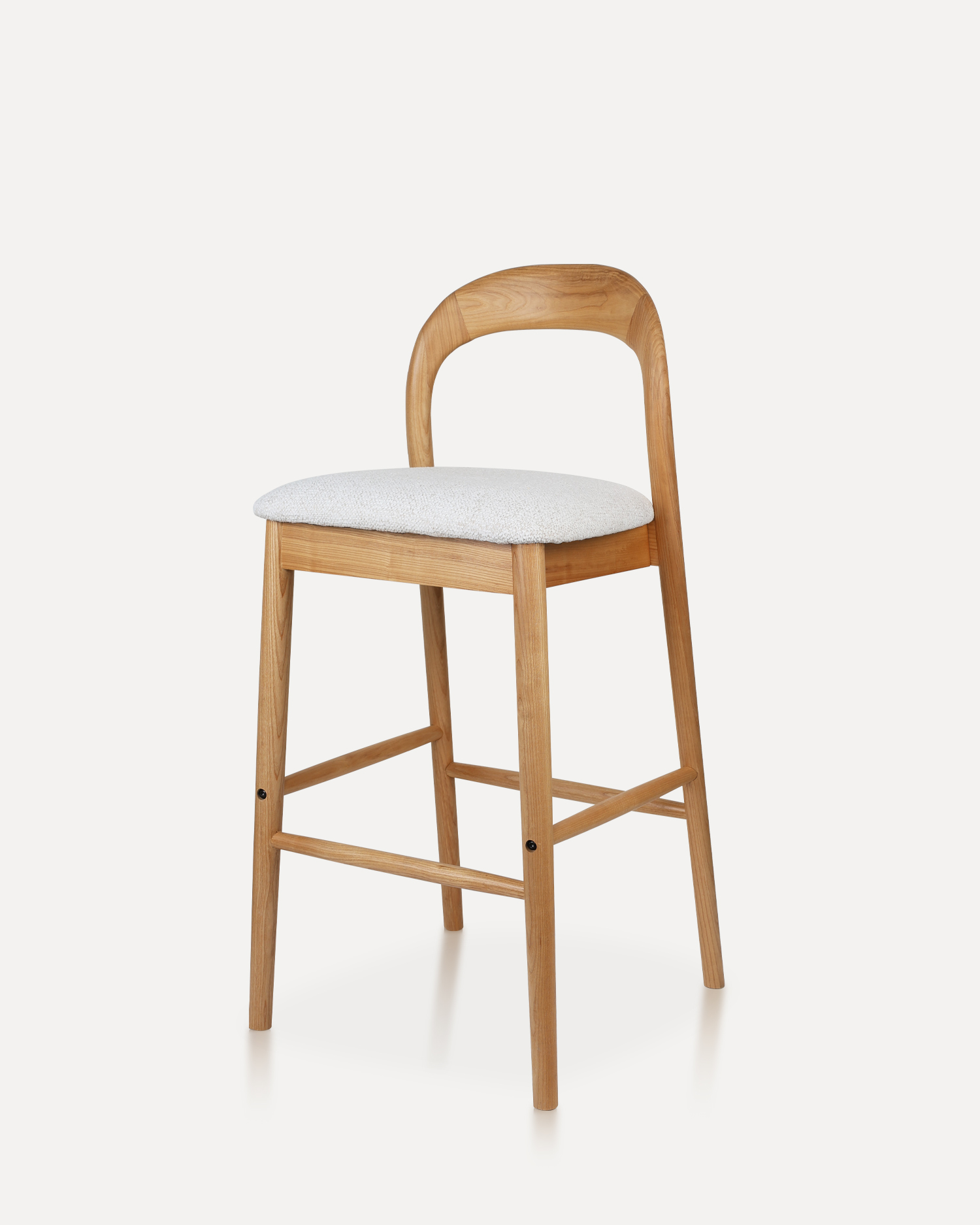
Wooden dining chair design spans an enormous range — from 18th-century reproduction Windsor chairs to minimalist Japanese-influenced forms built from a handful of precisely engineered components. The style you choose should feel consistent with the room's architecture, the table design, and the overall aesthetic direction of the space — not simply whichever design appealed most in a product photo.
The Windsor chair — characterized by its spindle back, saddle-shaped solid wood seat, and splayed legs — is one of the most enduring and widely reproduced chair designs in history, originating in 18th-century England and remaining in continuous production since. Modern Windsor-style dining chairs range from faithful reproductions in painted beech or ash to contemporary reinterpretations that retain the spindle back with a cleaner, more minimal frame. They suit farmhouse, cottage, traditional American, and eclectic dining rooms particularly well. The solid wood seat of a Windsor chair, often carved with a slight dish for comfort, eliminates upholstery maintenance and is nearly indestructible in daily use.
Ladder-back chairs feature horizontal rails across the back panel, evoking a ladder profile. Slat-back chairs use wider, flatter horizontal boards. Both styles have deep roots in American country and Shaker furniture traditions and continue to be produced in both traditional and updated forms. Shaker-influenced ladder-back chairs in cherry, maple, or oak are among the cleanest examples of functional wood furniture design — their proportions are precise, every element serves a structural or ergonomic purpose, and they age beautifully. These styles suit traditional, transitional, and craftsman interiors.
Steam bending allows wood — most commonly beech — to be shaped into curves that would be impossible to cut from solid stock. The Thonet No. 14 chair, designed in 1859, remains one of the best-known examples: its graceful curves are formed entirely from steamed beech rods, and it is still in production today. Contemporary bentwood dining chairs in ash or oak apply the same principle to more current forms, producing lightweight, visually open chairs with a warmth that metal and plastic cannot replicate. Steam-bent wood chairs are well suited to café, bistro, mid-century, and Scandinavian-influenced dining rooms.
Panel-back chairs use a solid or slatted wood panel as the backrest, providing full lumbar support across the lower and mid-back. The panel can be a single solid board, a series of vertical slats, or a carved decorative element. Panel-back wood dining chairs tend toward heavier, more substantial construction and are well matched to large farmhouse tables, rustic dining rooms, and dining spaces where the furniture is intended to read as permanent, built-in quality. They are notably comfortable for longer meals, as the full-height back panel supports the spine more completely than spindle or rail designs.
The finish on a wooden dining chair determines how the wood looks, how it resists moisture and staining, how easy it is to maintain, and how the chair ages over time. Many buyers focus entirely on color when choosing a finish — the more useful questions are about protection level and repairability.
Film-forming finishes like nitrocellulose lacquer and polyurethane create a protective layer on top of the wood surface. They provide good moisture and stain resistance, are easy to wipe clean, and preserve the wood's appearance reliably over time. The downside is that when a film finish chips, scratches, or peels — which it eventually will under daily use — the damage is visually obvious and requires stripping and refinishing to repair properly. Polyurethane is more durable than lacquer but harder to repair seamlessly; lacquer can be spot-repaired more easily because new coats bond chemically with existing layers.
Penetrating oil finishes — linseed oil, tung oil, Danish oil, and hardwax-oil products like Rubio Monocoat — soak into the wood fiber rather than sitting on top. They produce a matte, natural-looking surface that feels like wood rather than plastic and allows the grain to be seen and felt fully. Oil-finished chairs are easy to maintain: minor scratches and wear areas can be spot-treated with fresh oil without stripping the entire piece. The tradeoff is lower resistance to moisture and staining compared to film finishes — oil-finished wood should be wiped promptly if wet. Re-oiling annually keeps the finish performing well. This finish type is the standard for premium walnut and oak chairs where preserving the natural aesthetic is a priority.
Painted wooden dining chairs — most commonly on beech or rubberwood — are a practical and versatile option. A well-applied paint finish protects the underlying wood completely, is easy to clean, and can be refreshed or changed entirely with sanding and repainting. The quality of painted chairs varies enormously: look for a smooth, even surface with no brush marks, drips, or thin spots at edges and in recesses, which indicate rushed or inadequate paint application. Matte and eggshell painted finishes show fingerprints less than high-gloss options and tend to read as more contemporary and sophisticated.
Wood dining chairs require less maintenance than most people assume, but a few consistent habits make a significant difference in how well they hold up over years of daily use.
Product listings for wood dining chairs use terminology inconsistently, and the difference between solid wood, wood veneer, and engineered wood has significant practical implications for durability, repairability, and long-term value.
Solid wood means the entire structural component — leg, rail, back post, or seat — is milled from a single piece of timber. Solid wood chairs can be repaired, refinished, and structurally restored. Minor surface damage can be sanded out. Structural failures can be re-glued. They are the most repairable and longest-lasting option.
Wood veneer refers to a thin layer of real wood (typically 0.5 to 2 mm thick) bonded to a substrate — usually MDF, plywood, or particleboard. Veneer chairs can look identical to solid wood chairs from photographs and even from a few feet away in person. The visual difference is detectable at edges and corners where the substrate may be visible. Veneered components cannot be sanded significantly without breaking through the veneer layer, and cannot be structurally repaired in the same way as solid wood. For chair seats and decorative panels, veneer over quality plywood is a legitimate and stable construction method; for structural components like legs and back posts, solid wood is strongly preferable.
Engineered wood — including MDF (medium-density fiberboard) and particleboard — is used in the lowest-cost wood-look dining chairs. It machines cleanly, paints evenly, and costs a fraction of solid wood. However, it does not hold fasteners well (screws pull out under repeated stress), absorbs moisture readily at any unfinished edge, and cannot be repaired structurally. Chairs with MDF or particleboard structural components should be treated as disposable rather than durable furniture, and priced accordingly.
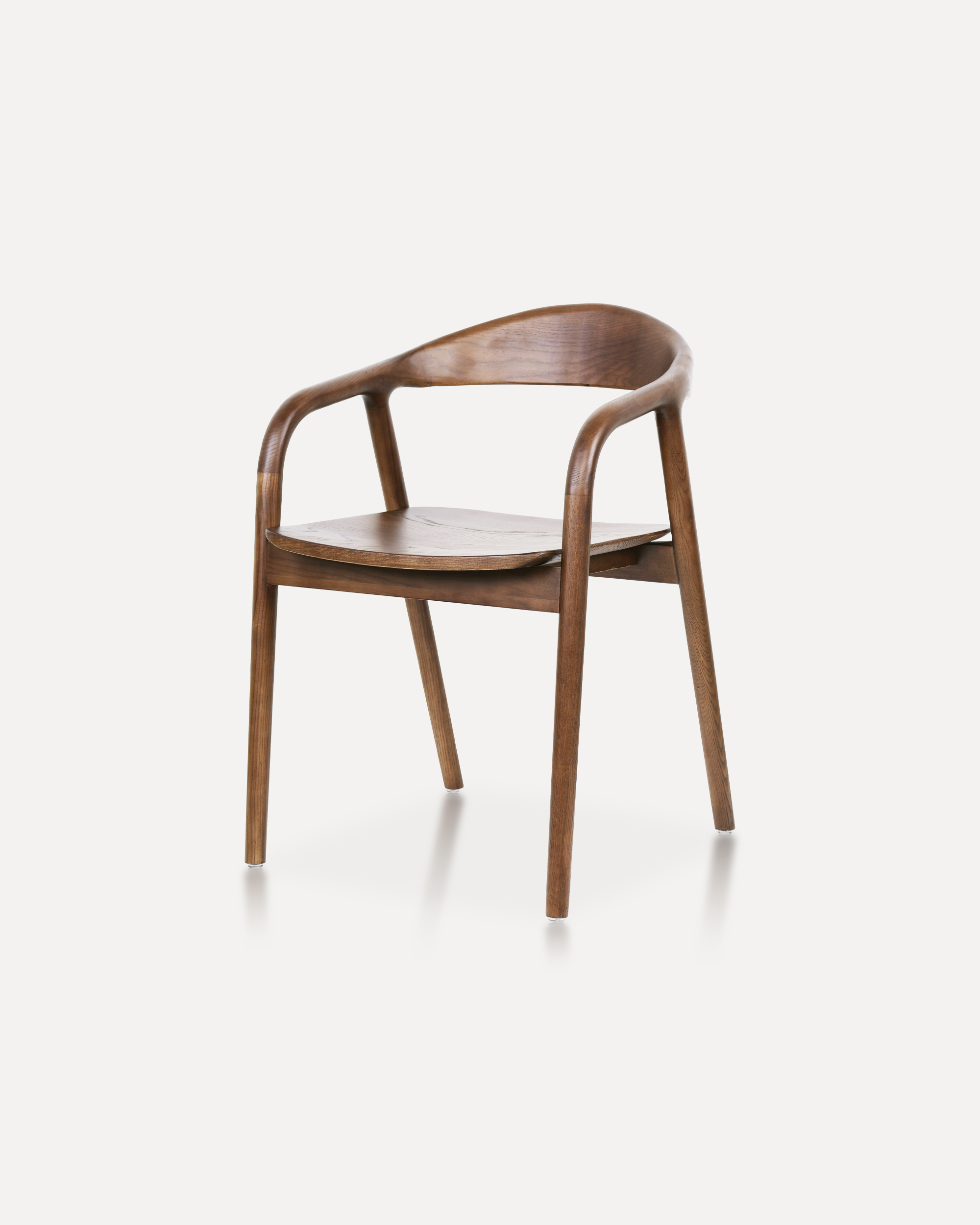
Crafted entirely from solid ash wood, this chair embodies a refined balance of ...
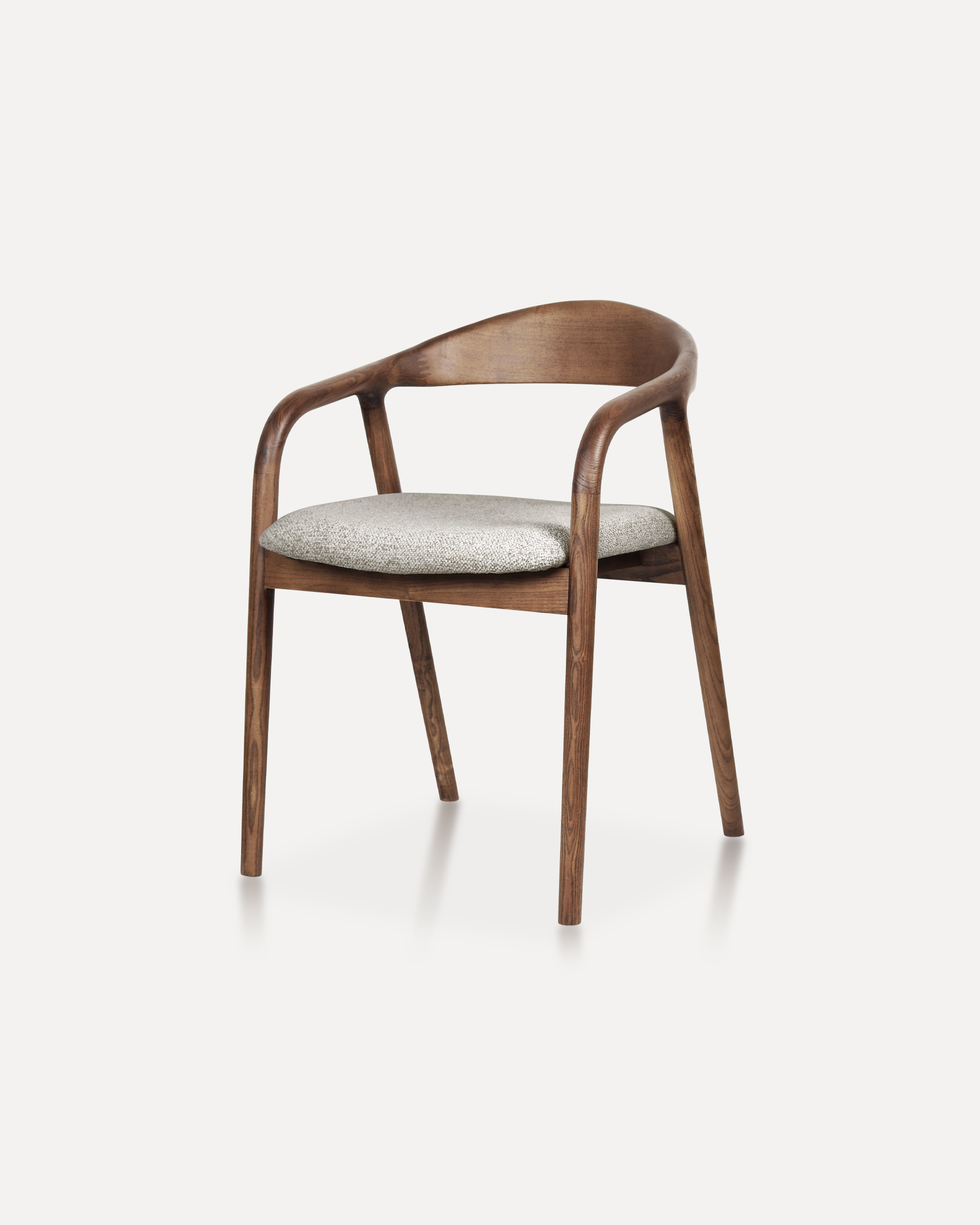
Showcases a refined silhouette with smooth, curved armrests and a gently rounde...
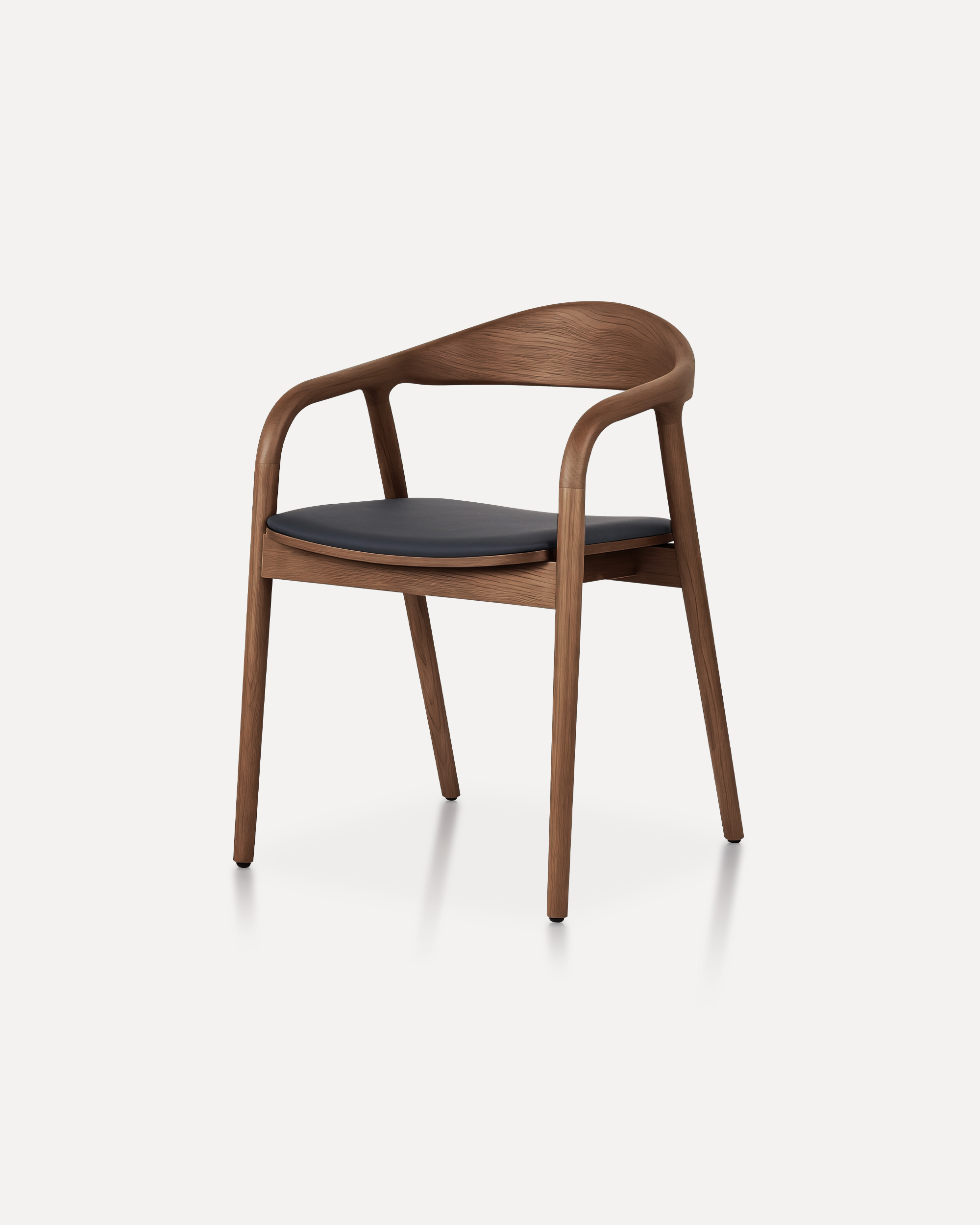
A masterclass in refined joinery and organic geometry, the Arc Chair features a...
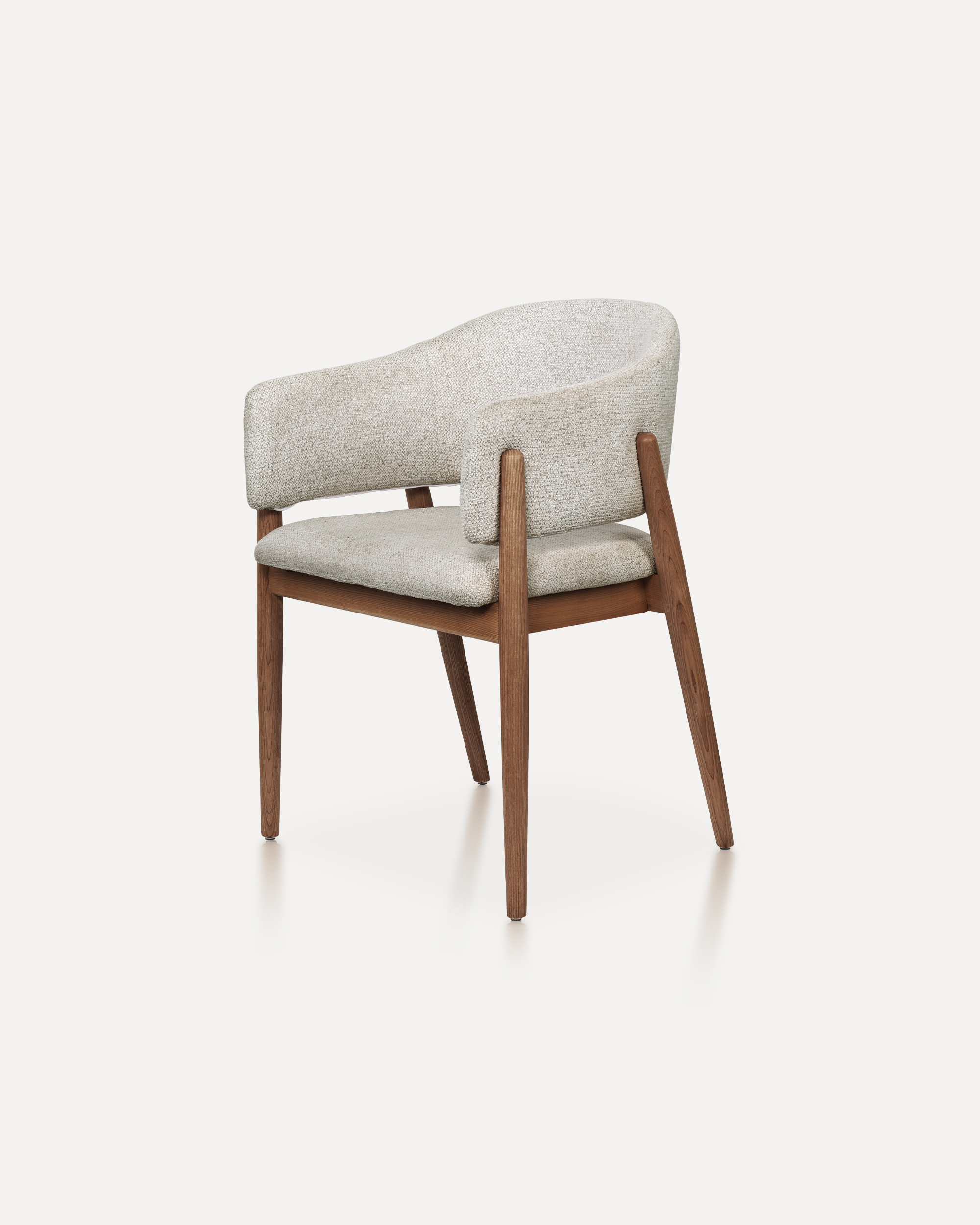
With its refined proportions and welcoming form, this chair brings quiet sophis...
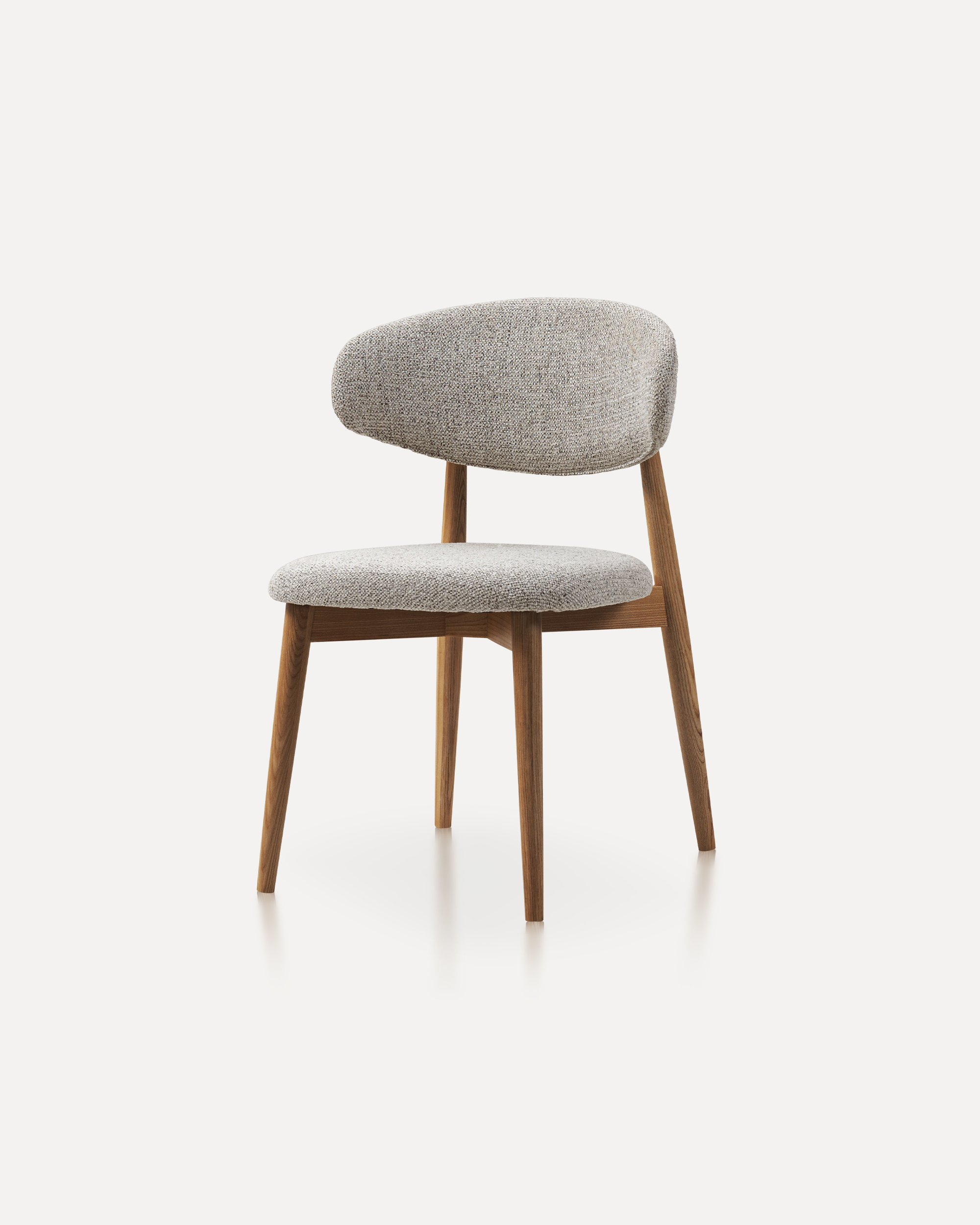
This wooden chair is a classic furniture piece that exudes warmth, durability, ...
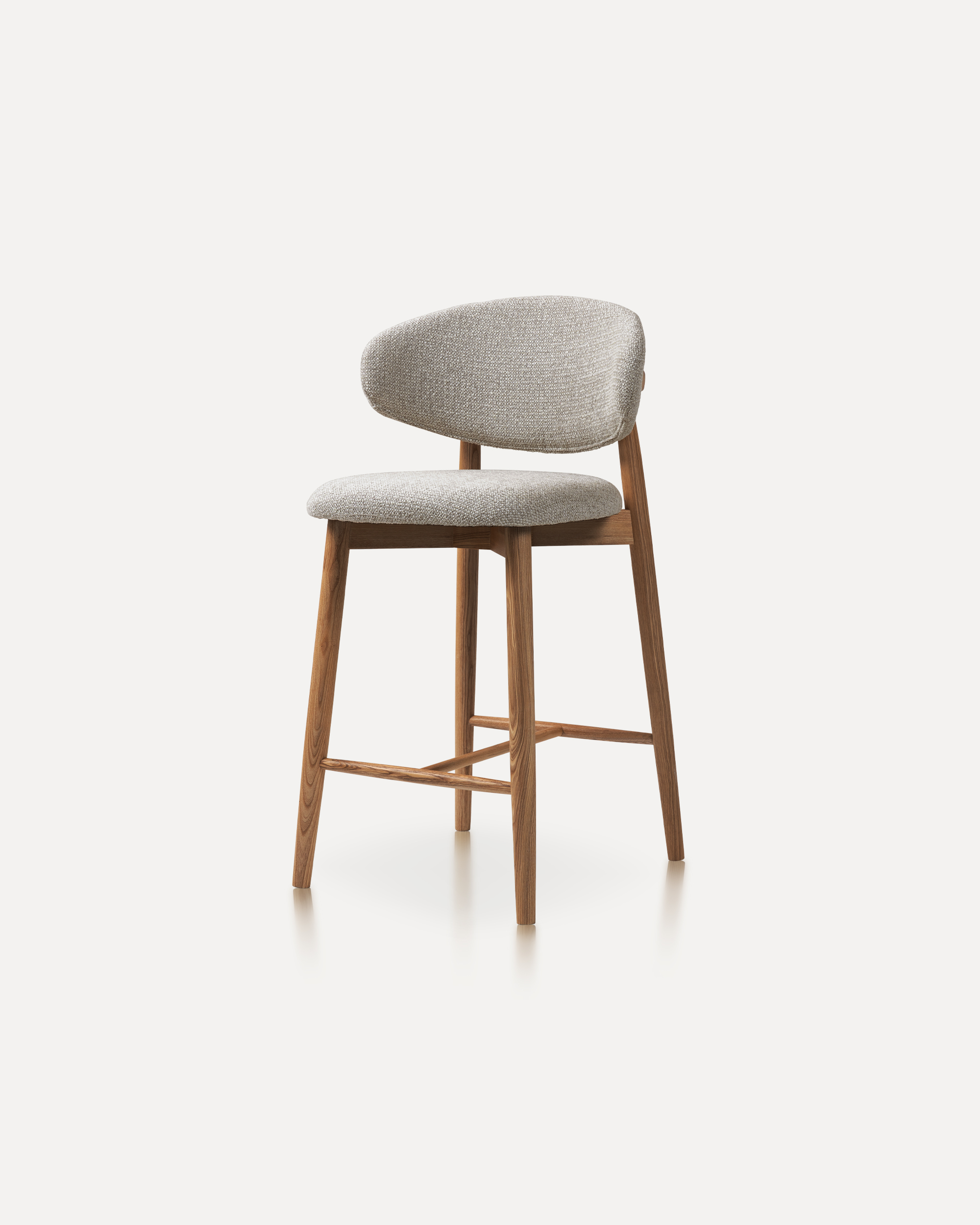
Our Wood Bar Stools are the perfect addition to any high-top table or bar setti...
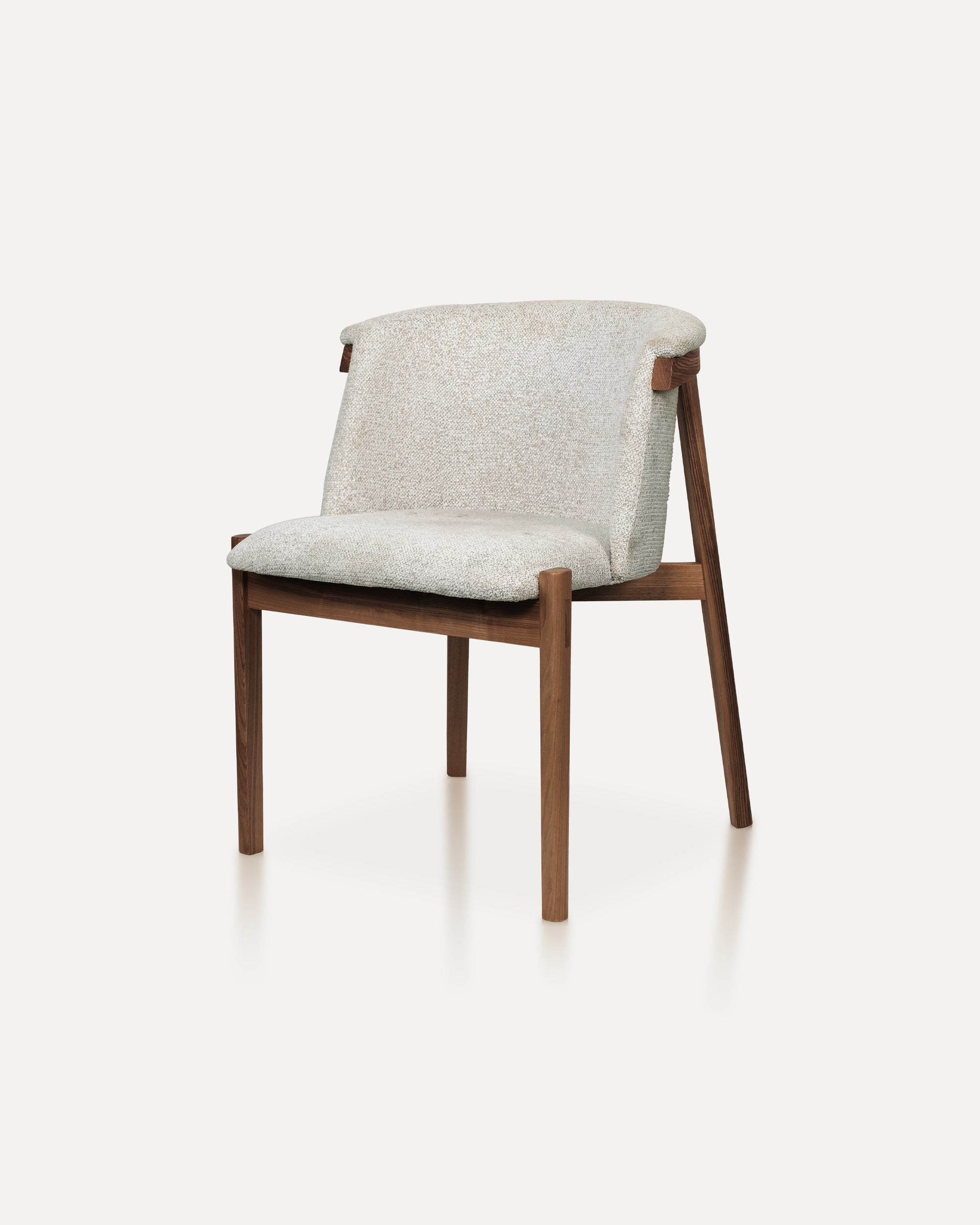
Bring natural elegance into your home with this finely crafted chair. The desig...
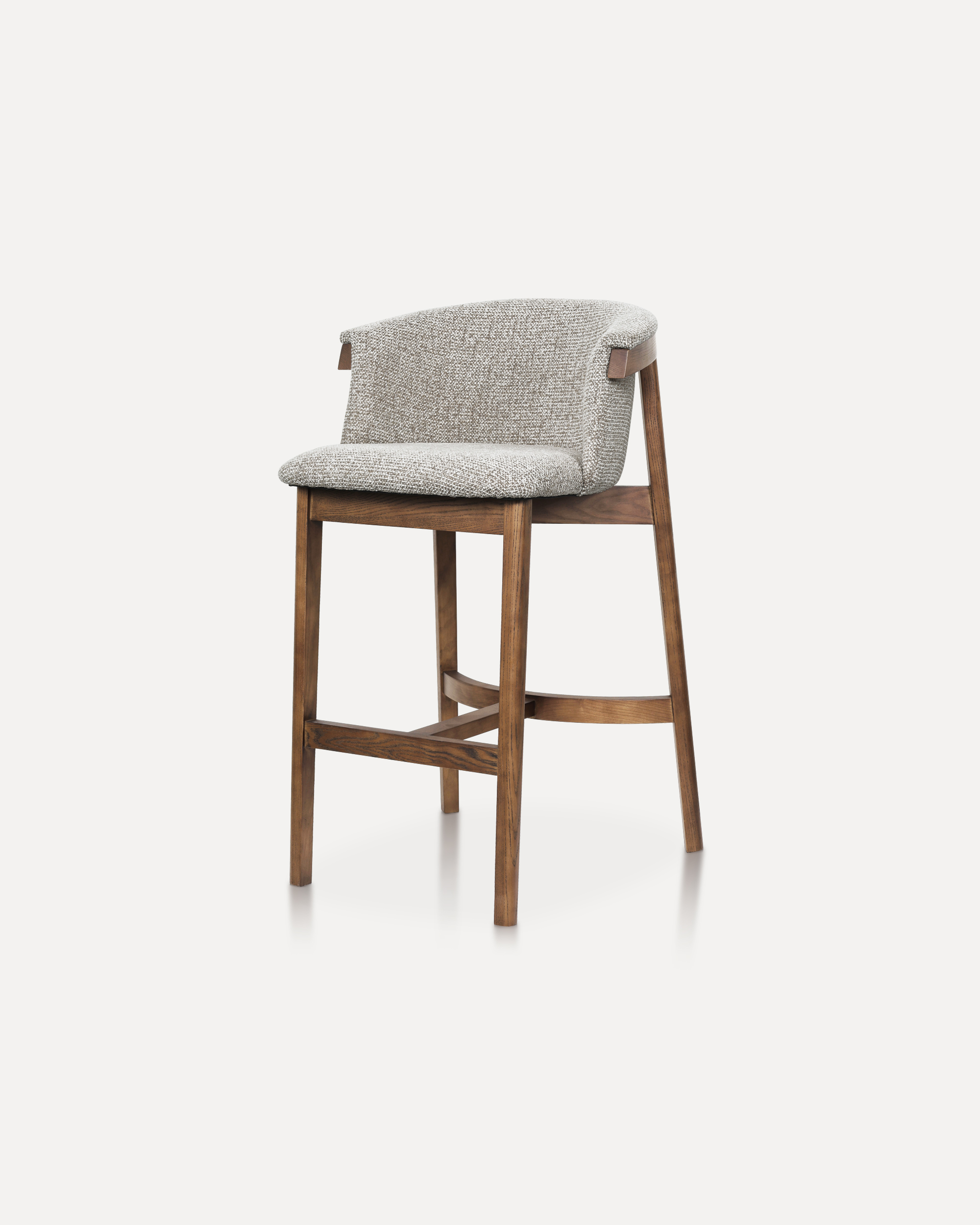
This sophisticated bar chair elevates any counter or high-top setting with its ...
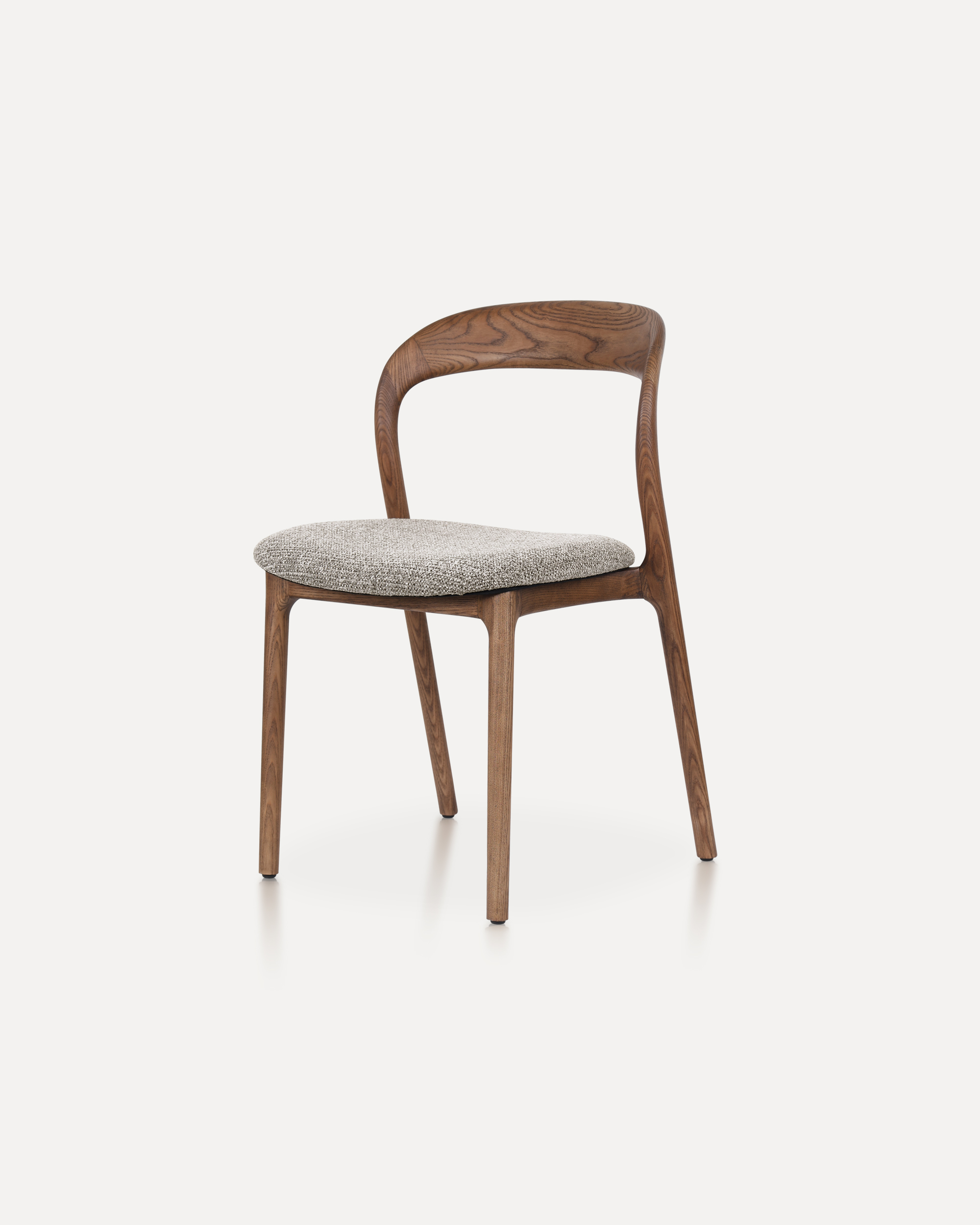
The Echo Chair is crafted from solid ashwood, featuring a unified back-and-arm ...
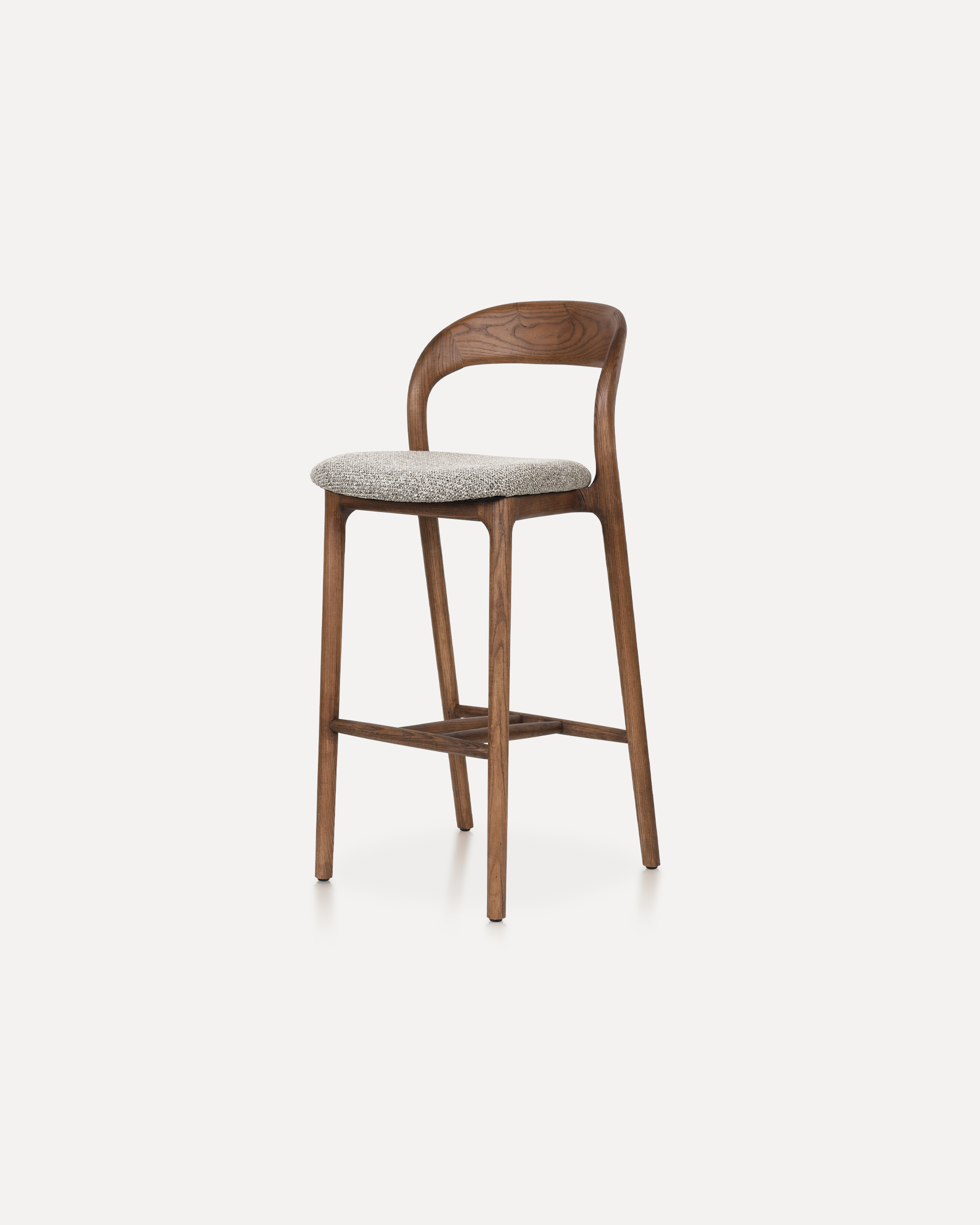
This Bar Chair is a counter-height seating solution crafted from solid ashwood ...
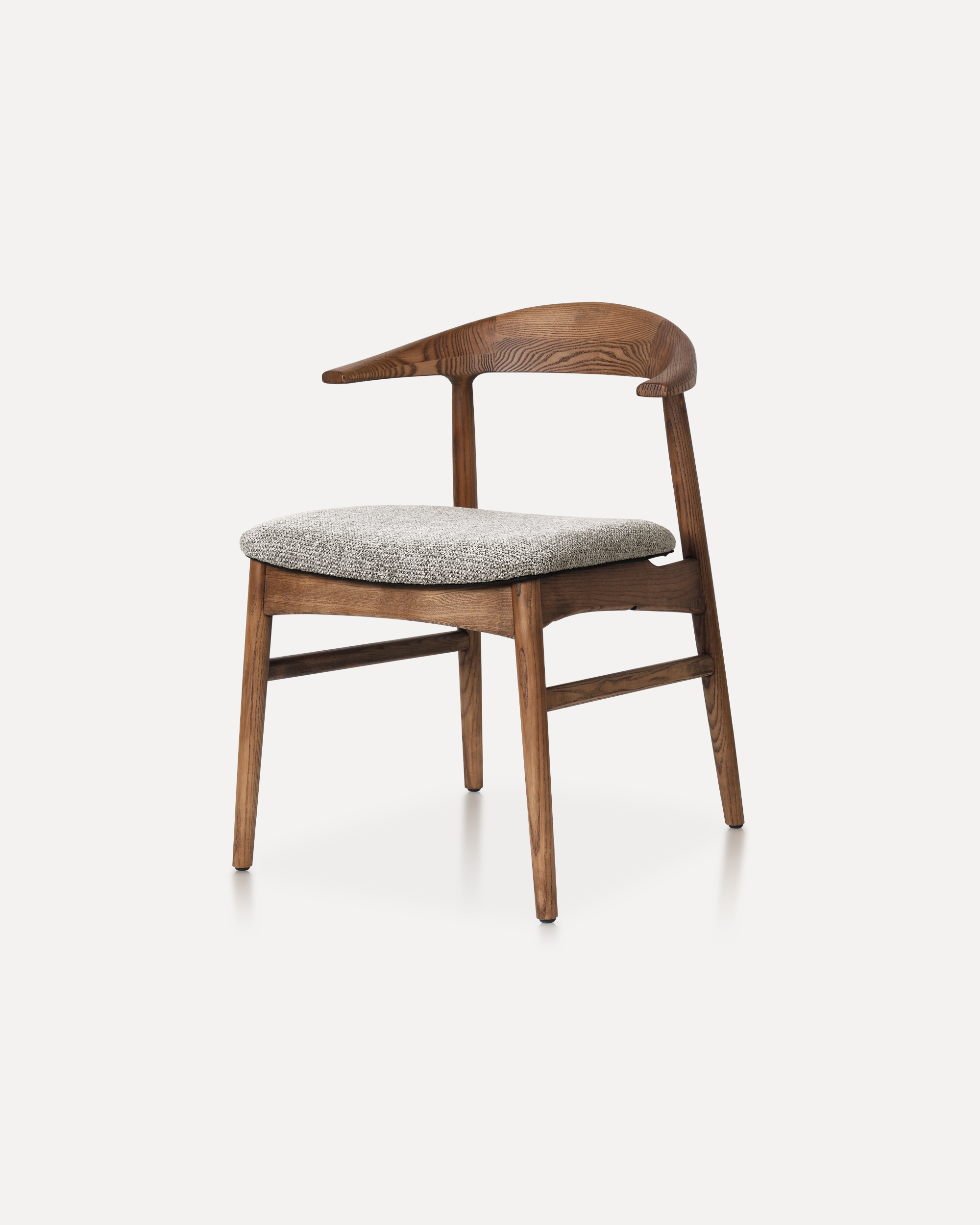
The Horizon Chair reinterprets mid-century warmth for today’s refined interiors...
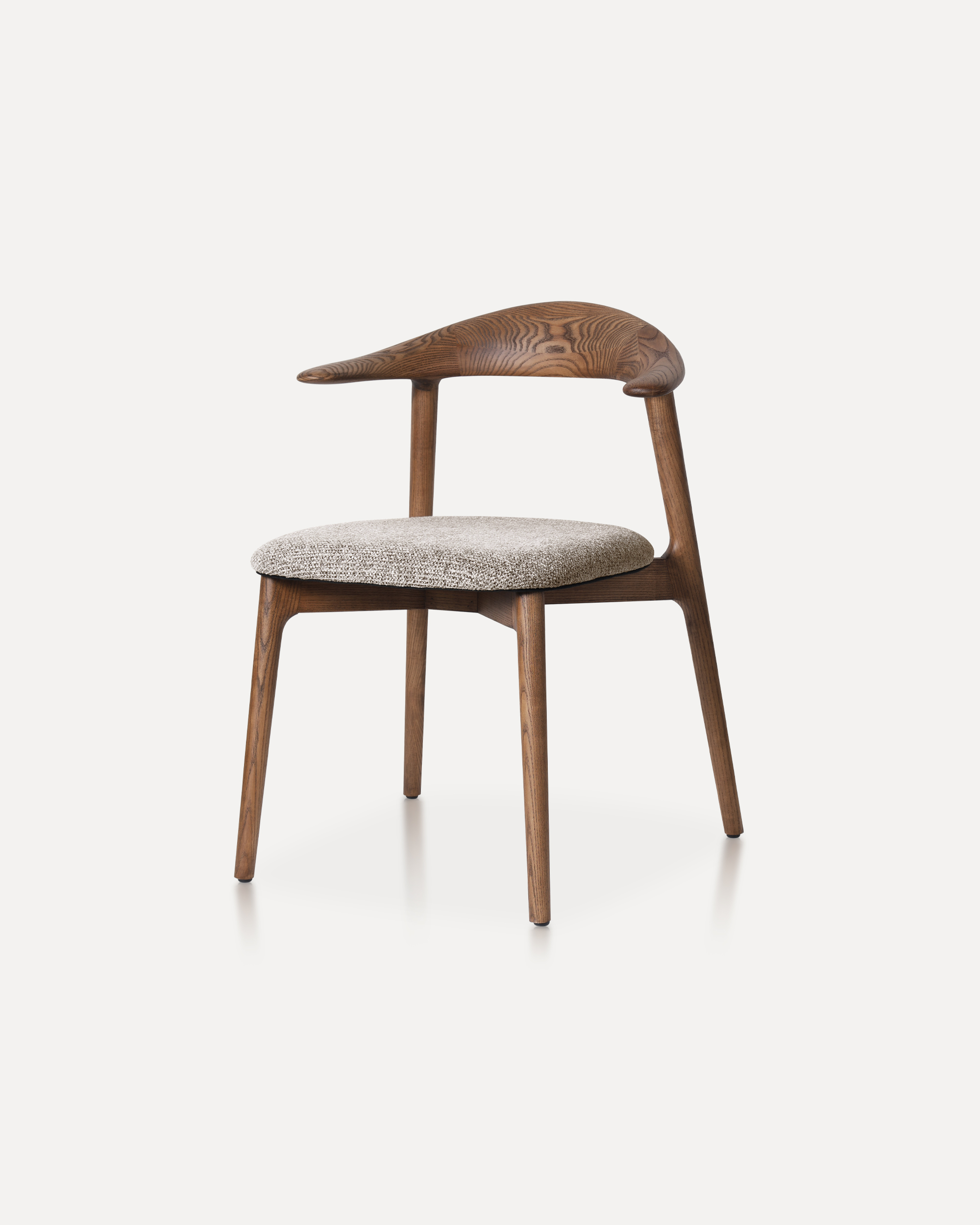
This classic features a striking, organic backrest carved from a single slab of...